A Blessed Bond: Life on a Cow Farm
By Hanna P P
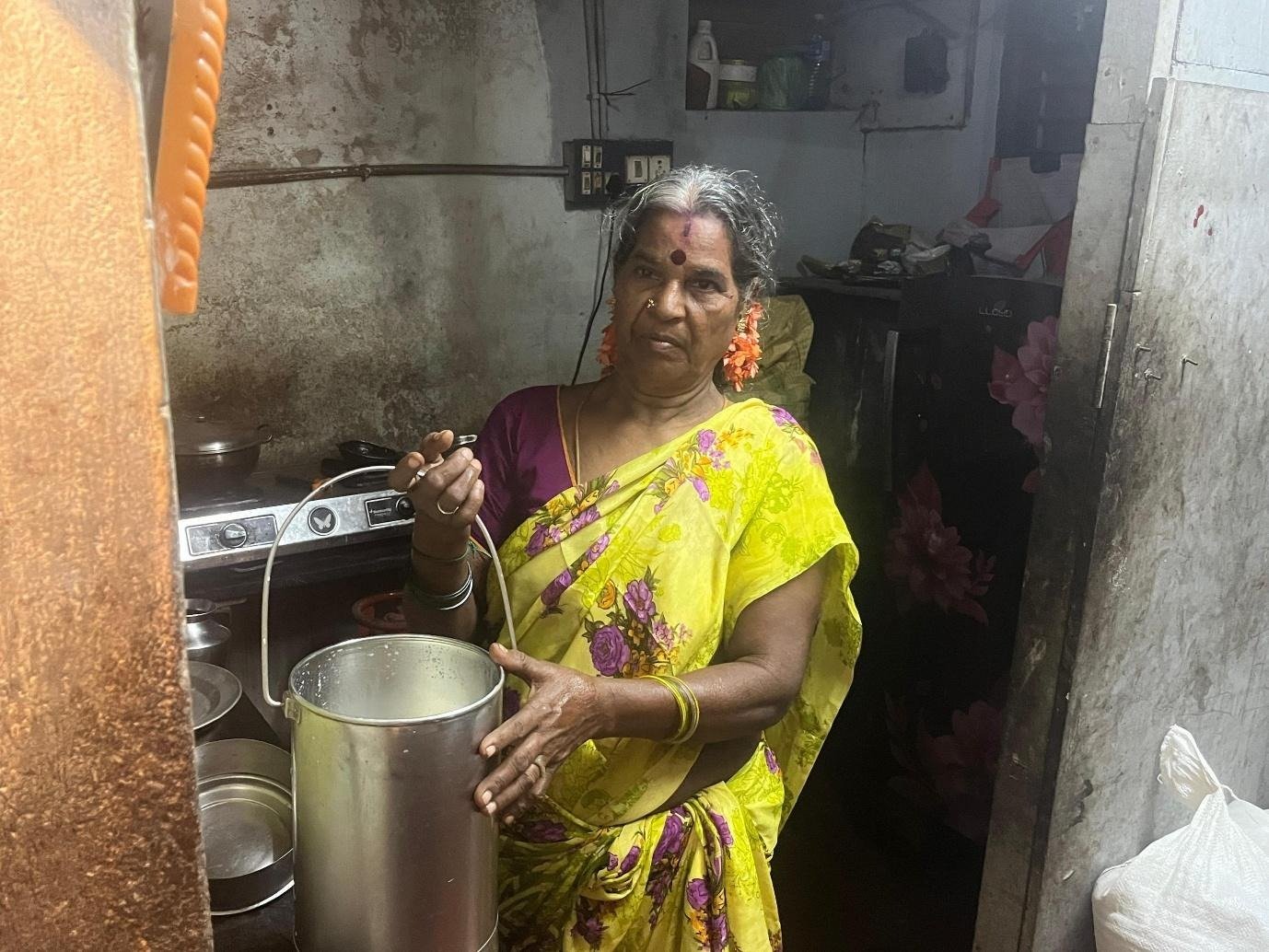
Aadyilakshmi, after milking the cows
Ramasamy &Aadyilakshmi
Ramasamy and Aadyilakshmi, an old couple, spend their days nurturing their cows, Tanapakyam and Mahalakshmi. Once a university hostel supervisor, Ramasamy now finds purpose in this new chapter of life, where he and his wife treat their cows as family. The couple believes that having cows brings blessings into their home. They care for Tanapakyam, the 10-year-old mother, and her month-old calf, Mahalakshmi, as they would their children, finding joy and meaning in every task. Their farm may be small, but it’s filled with love and purpose.
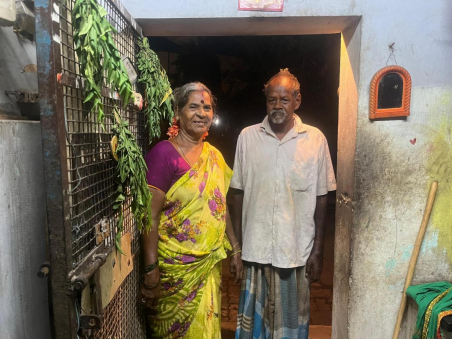
Ramasamy and Aadyilakshmi at their farm
Ramasamy Engire’s previous role as a university supervisor was more intellectual. It required him to be punctual and systematic. Since retiring, he has become more relaxed, having transitioned between two very different fields. While he often reflects on his days working at the university, farming now presents its own challenges. Balancing the farm’s income and expenses is difficult. The cows eat more than the family, meaning a significant portion of their budget goes toward feed.
The farm’s outlook is simple—two cows, a patch of green grass, and the gentle hands of Aadyilakshmi as she prepares to feed them. For this couple, life revolves around their cows, providing both nourishment and a sense of fulfilment. The cows produce 10 litres of milk daily, which is sold for 35 rupees per litre, providing a modest income. This quiet routine is the couple’s rhythm of life, where hard work and simplicity blend seamlessly. With minimal resources, Ramasamy and Aadyilakshmi sustain their farm, proving that a small space can yield great blessings.

Aadyilakshmi holds grass to feed Tanapakyam and Mahalakshmi.
Aadyilakshmi, the all-rounder
The farm story would be incomplete without mentioning Aadyilakshmi. She is truly an all-rounder. Despite the challenges of age, she works tirelessly on the farm, feeding, maintaining, and caring for the cows. She is also the one responsible for milking them daily. Her kindness and dedication to this work are a blessing in themselves. In addition to managing the farm, she also takes care of her family, balancing her role as a housewife. With love and without hesitation, she shares the milk with their neighbours.
Mahalakshmi, the one-month-old calf, affectionately licks Aadyilakshmi’s hand, a sign of the deep bond between them. The calf, born into this loving home, is showered with attention and care. This moment is a testament to the couple’s dedication to their cows, showing that farming is about more than just work; it’s about creating a connection. Aadyilakshmi and Ramasamy believe that these cows are part of their family, and every gesture—like this gentle lick—reminds them of the warmth that animals can bring into their lives.
“You don’t have to be afraid. They never attack—they’re so gentle. When they lick you, it’s their way of showing love.”
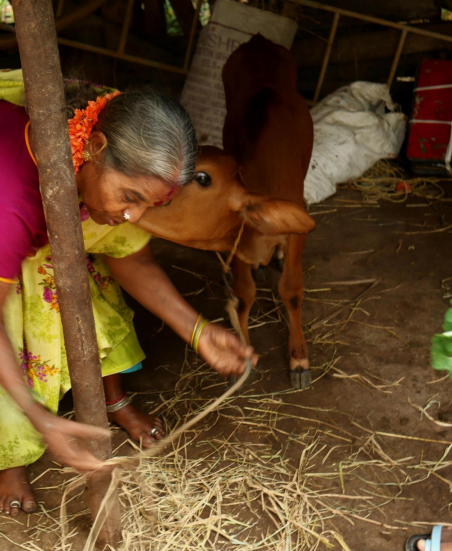
The bond between Mahalakshmi and Aadyilakshmi
Aadyilakshmi hands over a container of fresh milk to her neighbour, their faces lit up with smiles. This daily exchange is about more than just milk; it’s about building relationships. The farm’s small output sustains the couple, but it also nourishes their community. Sharing milk with their neighbours fosters a sense of connection that transcends monetary value. Aadyilakshmi’s generosity reflects the spirit of their farm: a place where blessings are shared, and joy is found in everyday interactions. Their farm enriches not just their lives but those of their neighbours too.
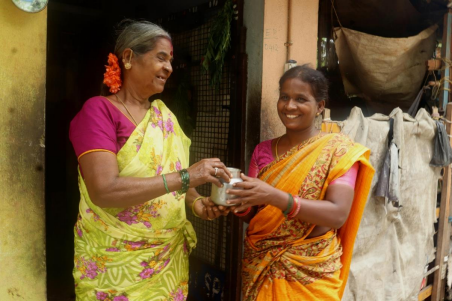
Aadyilakshmi shares milk with her neighbour, a daily ritual of goodwill.
“Ramasamy and Aadyilakshmi care for their cows like family, always ready to lend a hand to anyone in need.”
Mahalakshmi, still just a month old, drinks milk from her mother, Tanapakyam. This simple yet profound act symbolizes the continuity of care that flows through the farm. Just as Tanapakyam provides for her calf, Ramasamy and Aadyilakshmi tend to their cows with the same devotion. The cycle of life is visible in every corner of the farm, where nurturing, feeding, and milking all come together. Mahalakshmi represents the future, and watching her grow strong each day gives the couple hope for what lies ahead for their humble farm.
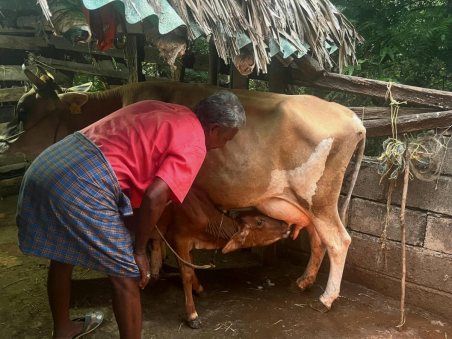
Mahalakshmi drinks milk from her mother, symbolising the natural cycle of care and nourishment.
At 6 AM and 6 PM, Aadyilakshmi performs her daily ritual of milking Tanapakyam. Each time, she collects about 10 litres of milk, which supports their modest livelihood. For the couple, this routine is more than just work—it’s a meditative practice that brings order to their day. Milking the cow is a reminder of the blessings their animals provide, sustaining them and giving purpose to their farm life. The calm, repetitive nature of the task is a grounding force in their otherwise simple, peaceful life.
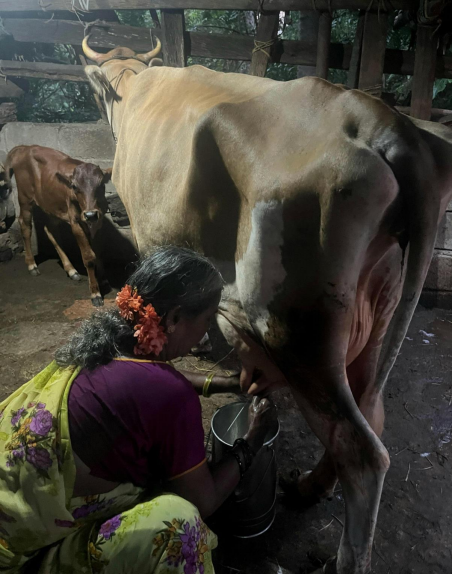
Aadyilakshmi is collecting the milk they depend on for their livelihood.
The couple meticulously tracks their farm’s expenses and income in a small manual book. The feed for the cows costs 1350 rupees per 10 kg, which they purchase weekly. Selling the milk at 35 rupees per litre provides them with just enough to cover their costs and maintain the farm. Though the numbers are small, Ramasamy and Aadyilakshmi manage their finances carefully, ensuring their cows are well-fed and their farm runs smoothly. Every rupee counts, and their diligent bookkeeping reflects their commitment to keeping the farm sustainable.

The manual book where Ramasamy and Aadyilakshmi track the costs and profits of their small farm.
Ramasamy and Aadyilakshmi feed their cows with hay, paddy straw, grass, and copra. Every week, a vehicle delivers the copra and other food, which they store. However, the cost of feeding the cows often exceeds what they earn from selling milk. Despite their efforts, they receive no support from either the corporation or the government, even as a small industry. Political leaders frequently visit during election campaigns, making promises, but ultimately, nothing changes to benefit them.
“They come with promises in their pockets during elections, but once the votes are counted, we are left with nothing but empty words.”
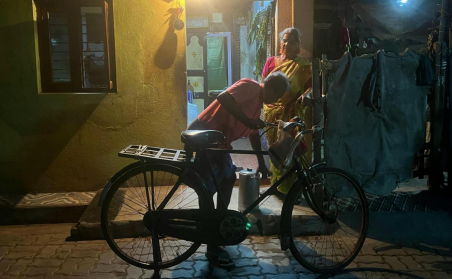
Ramasamy rides through the village, delivering milk—an essential part of their day.
From Farm to Table: The Path of Quality Milk
Ramasamy sets off on his bicycle, balancing a container of fresh milk as he rides through the village. Each day, he delivers milk to his neighbours, ensuring they have access to fresh, nourishing dairy. This simple routine has become an essential part of the couple’s life, connecting them to their community. On two wheels, Ramasamy brings the blessings of their small farm to others, continuing the cycle of care that defines their way of living. With each delivery, the couple strengthens the ties that make their farm an integral part of village life.
Ramasamy and Aadyilakshmi take great care to ensure the milking process is done with utmost cleanliness and hygiene. Before milking, they thoroughly clean the cows’ udders. The milking area is kept tidy, and they follow strict routines to maintain sanitary conditions. This careful attention ensures that the milk they collect is of the highest quality, safe for consumption even before it reaches the society corporation for further distribution. Their dedication to cleanliness reflects their deep respect for the cows and the people who will eventually drink the milk.
After milking is done at 6 AM and 6 PM, Ramasamy and Aadyilakshmi carefully collect the milk and deliver it to the local society corporation. The corporation acts as a central hub, where milk from various local farmers is pooled together. It undergoes quality checks, ensuring it meets safety and hygiene standards before being processed. From there, the milk is distributed to households, retailers, and other vendors across the community. This system not only supports local farmers like Ramasamy but also ensures a steady supply of fresh, high-quality milk to consumers in the region. Through this collaboration, both the farmers and the community benefit from a sustainable supply chain.
Curated by: Sayni Khatun & Ankit Raj