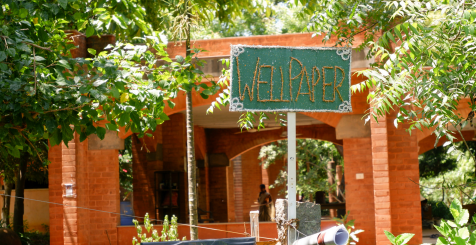
The Art of Tradition – Ramaswamy’s Pottery Legacy
By Aswathi S
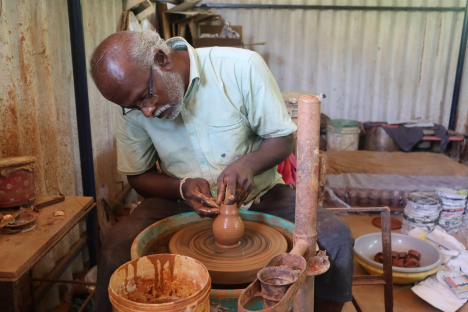
Ramaswamy, a master potter from Auroville
For Ramaswamy, pottery is not just a craft—it’s a way of life that has been passed down through generations. Based in Auroville, Ramaswamy runs Amman Clay Pottery, where his entire family is involved in preserving and continuing the family tradition. This photo story captures the life and work of Ramaswamy, a craftsman deeply rooted in tradition yet adapting to the challenges of today. Each piece of pottery reflects not just skill, but the soul of Tamil culture and the strength of a family working together to preserve it.
A Tradition Passed Through Generation
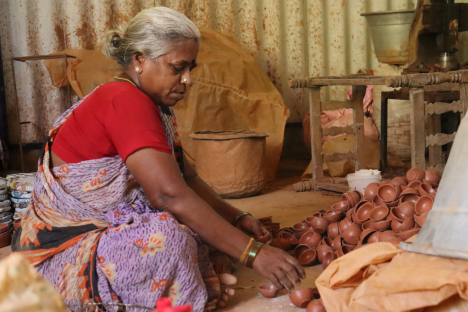
From Hands to Heart : Preserving Tradition through Craftsmanship
Pottery has been a cornerstone of Ramaswamy’s family for generations. “My father, grandfather, and their ancestors practiced this craft,” he shares. Ramaswamy spent his childhood observing the art of shaping clay, gradually learning the delicate details of pottery-making. Today, he continues the legacy at Amman Clay Pottery, where the entire process is a family effort.
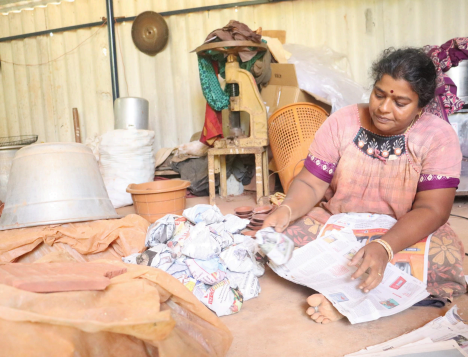
Valarmathi packs each finished piece with love
Ramaswamy’s pottery business is truly a family affair. “All the workers in this shop are family members,” he explains. His wife, children, and relatives are involved in different stages of the pottery-making process, from preparing the clay to managing the kiln. “By keeping it within the family, we preserve our heritage and ensure the knowledge is passed on.”
The Foundation of Pottery
Where hands meet art
At Amman Clay Pottery, they use locally sourced village clay and red clay, materials that have been used in Tamil Nadu for generations. “These materials are well-suited for the kind of pottery we make,” Ramaswamy says. The quality and origin of the clay form the basis for each piece, ensuring that the tradition of local craftsmanship continues.
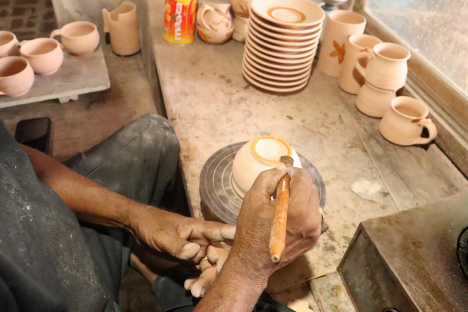
The potter’s touch
“From sourcing natural clay to firing in a kiln, our artisans meticulously craft each piece, combining traditional techniques with precision and creativity” – Ramaswamy
Crafting pottery: From idea to final stage
The journey of creating a pottery piece begins with sourcing the right clay. After the clay is prepared, Ramaswamy shapes it on the potter’s wheel or by hand, depending on the design. “Once shaped, the piece dries and is then fired in the kiln,” he explains. The final touch involves glazing and firing it again, giving it its distinctive finish.
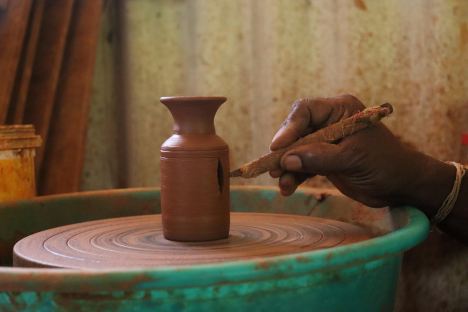
Careful etching brings life to the clay
Drying the pottery is a critical step before firing, a tradition Ramaswamy’s family has followed for decades. “We use
traditional techniques, and the entire process reflects the skills passed down through generations,” he adds. The tools Ramaswamy uses today are the same as those used by his father and grandfather. “We still use the potter’s wheel and hand tools for shaping and carving,” Ramaswamy explains. These tools, combined with a wood-fired kiln, are key to maintaining the rustic, traditional look of his pottery.
Challenges in a Competitive Market & Overcoming Financial and Operational Risks
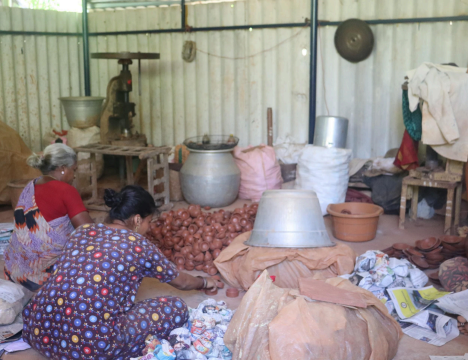
Family members joining hands in every step of the pottery-making journey.
The rise of pottery shops in Pondicherry and Auroville has made the market more competitive. “We’ve had to find ways to stand out,” Ramaswamy says. Amman Clay Pottery focuses on creating unique designs to sustain in the market.“Quality and tradition are what keep us going in a crowded market,” he adds. Ramaswamy’s commitment to craftsmanship and unique designs has helped his business sustain. His pottery reflects the rich culture of Tamil Nadu. Running a small-scale pottery business comes with risks, including fluctuating material costs and losses during the firing process. “We try to manage by buying in bulk when prices are low,” Ramaswamy says. He also carefully monitors the kiln to minimise wastage. “Every loss impacts our finances, so we have to be as efficient as possible,” he explains
Although it is a small-scale business, they manage to thrive by handling distribution themselves, without relying on external parties. Orders come from across Tamil Nadu and Bangalore, especially during festive seasons like Pongal and Diwali, when demand for clay pots and decorative items is high. To extend their reach beyond local markets, they have also created an online presence through their website, where customers can easily place orders. This combination of personal distribution and online sales has helped them sustain in the competitive market of Pondicherry and Auroville.
Festival Season: A Boon for Business
Festival seasons, especially Pongal and Diwali, are peak times for the business. “We get a lot of orders for traditional clay pots and decorative items,” Ramaswamy says. During these seasons, the family anticipates demand and prepares accordingly, ensuring they can meet the influx of orders from Tamil Nadu and Bangalore. “Pottery has always been a part of Tamil culture,” Ramaswamy reflects. Beyond just household items, it holds a cultural significance that spans generations. By continuing the practice, Ramaswamy’s family keeps this heritage alive .
“WE preserve the traditions that have been a part of this land for centuries” – Ramaswamy
The Enduring Spirit of Amman Clay Pottery
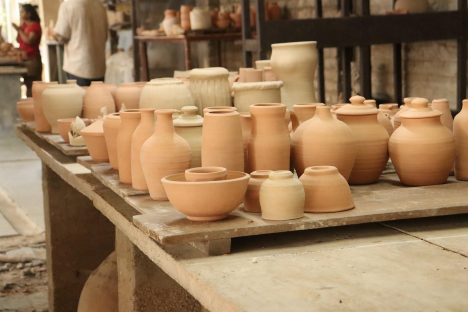
Art in Progress, freshly molded clay pots and vessels await the next stage of the pottery-making
Ramaswamy’s journey reflects the enduring spirit of a craft that is more than a livelihood—it’s a way of life. For over 30 years, he has nurtured Amman Clay Pottery, combining tradition with innovation to sustain his family’s legacy in an ever-evolving world. “For us, pottery is not just about making a product; it’s about continuing a heritage,” he concludes.