
Southern Cinema’s YES ALL MEN vs NOT ALL MEN Narrative
By Nithin Durairaj
During a bus journey from Bangalore to Salem, a woman in her twenties occupied the aisle seat beside me. She placed her bag on the middle seat between us as a barrier, and even when another passenger briefly took that seat and later left, the bag returned to its place. Nothing was spoken over there, but her actions screamed a truth that I couldn’t unsee, as she felt safer with a bag beside her than a man. These gestures often pass unnoticed unless one pauses to recognise what they quietly communicate.
“Not All Men” is the common phrase that pops up in the comment section when a woman shares her story of abuse, harassment, or violence on social media. But what if the issue isn’t about individual men but the system that enables such behaviour? Through the films of Kollywood and Mollywood, such as Maharaja, Chiththa, and Aattam, South Indian cinema has begun to discuss certain tensions, where it sometimes reinforces the “Not All Men” narrative and at other times bravely confronts the uncomfortable truth behind the “Yes All Men” narrative. This article is going to focus on how these films reflect and reshape our understanding of masculinity, complicity, and change.
The “Not All Men” Narrative in Tamil Cinema :
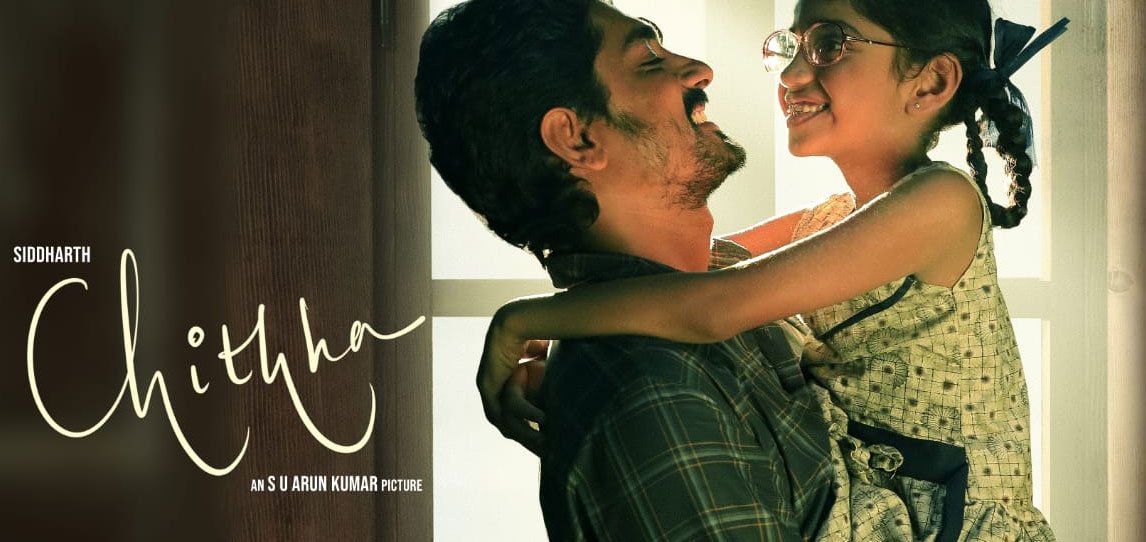
Whenever someone upholds the “Not All Men” narrative, the focus quietly shifts from addressing the culture of harassment to defending men’s reputations. In Tamil Cinema, even films with progressive intentions often fall into this trap, and the prime examples are Chithha and Maharaja, which were released in 2024. In Chithha, the story revolves around Eesu (Siddharth), an uncle who seeks revenge on the man who assaulted his niece. While the film intends to showcase a sensitive male figure, it ultimately sidelines the survivor’s journey. One powerful scene shows Shakthi(Nimisha Sajayan) revealing her childhood abuse to Eesu, who immediately reacts with a thirst for revenge rather than asking how she had healed over the years. Ironically, the film concludes with Eesu taking revenge, reinforcing the idea that justice lies in male action rather than female agency.
This is further seen when Eesu resists the police suggestion to check the girl’s acquaintances by saying, ‘Why do you always blame the acquaintances?’ Where it’s a line that echoes the “Not All Men” sentiment, despite reports of the National Crime Records Bureau(NCRB) that more than 90 percent of abuses had been committed by their close family members, and as per the Centre for Social Research across the world the majority of the abuses are committed by people known to the victims than a stranger. Similarly, Maharaja frames a father’s grief and rage as central, reinforcing the idea of men as protectors and women as the ones being protected.
Instead of exploring the psychological trauma of the victim, the film justifies violent male revenge, emotionally packaged as righteous. There is a particularly problematic moment when a police officer says, ‘Would we stay quiet if this happened to our daughter?’ This line implies that women deserve protection only because they are related to men rather than as individuals with their own dignity and rights. While both films aim to address serious issues, they ultimately uphold the “Not All Men” narrative by framing male saviourhood as the solution rather than confronting the larger structures of patriarchy that allow such violence to persist.

There is often confusion when it comes to understanding the phrase “Yes All Men”. Especially on social media, whenever women speak out about harassment or abuse, many men respond with ‘Not All Men,’ taking the term as a personal accusation, as if it’s saying every man is an abuser. But that’s not what ‘Yes All Men’ means, as it doesn’t claim that every man is a rapist or molester. Instead, it highlights that the abuser can be anyone, like a girl’s brother, father, uncle, neighbour, friend, or even someone she trusts.
As seen earlier, perpetrators in cases of sexual violence are men, and over 90% of them are known to the victim. ‘Yes All Men’ isn’t a slogan of hate, but it examines how patriarchal norms operate invisibly. As even in movies, men are assumed to be protective and authoritative by default, while women are expected to adjust and remain silent. This imbalance allows the harmful men to remain hidden in everyday roles as family members, friends, colleagues, who remain outside immediate suspicion.
The “Yes All Men” Narrative in Aattam:
In a cultural landscape saturated with ‘Not All Men’ narratives, Anand Ekarshi’s Aattam boldly breaks the pattern by unapologetically confronting the ‘Yes All Men’ reality. The film went on to win three National Awards for Best Feature film, screenplay, and editing at the 70th National Awards. At its core, Aattam tells the story of Anjali, the only woman in a theatre troupe who became the target of sexual harassment during a celebratory party. But more than that, it’s a story about how a group of men respond to that harassment, which is not with action but with defensiveness and moral cowardice.

What makes Aattam stand apart is that it refuses to fall into the ‘good man’ trope. Unlike most films that portray one villain while allowing the rest of the male characters to remain untouched and redeemed. In contrast, Aattam turns the spotlight on everyone. It doesn’t seek to provoke the audience through revenge or violence. Instead, it unsettles them by asking: Why do men stay silent when it matters the most? Why is protecting one’s image more important than standing with the victim?. One of the most powerful scenes is when Anjali stages a play, reenacting her trauma. In this scene, all the characters wear masks. At the climax of the performance, one of the male troupe members confesses to her that he is the abuser, but instead, Anjali refuses to see him. She says that while one man may have physically assaulted her, all others mentally harassed her with their selfishness, denial, and silence. This particular move of the director made everyone sit with complicity rather than to escape into the masculine redemption.
The essence of the ‘Yes All Men’ narrative can be understood through a simple metaphor: imagine a box of ten chocolates, but one of them is poisoned. Would you eat from the box, thinking “the chances are low”? Or would you hesitate, unsure which one might be poisoned? That’s exactly what the ‘Yes All Men’ narrative tries to convey to us. Aattam withholds resolution not just to create suspense, but to confront the audience with moral ambiguity that mirrors the real-world complicity. Although Chithha and Maharaja engage with themes of sexual violence, their narrative frameworks turn out to be male protection and retaliation, while Aattam takes a different approach, which interrogates complicity and shared responsibility. It’s crucial that we, as an audience, engage critically with such films not just to call out their flaws but to help filmmakers grow more conscious of the stories they’re telling, especially when dealing with trauma and justice.
Cinema will continue to approach sexual violence through different genres and narratives. What matters is not uniformity but awareness because stories consistently frame the harm through the male saviour complex and eclipse the survivor’s experience. A more attentive audience engagement, which asks what is being centred and what is being sidelined, can open for a more responsible and reflective storyline.


