Ghungroo
By Lipsa Akkala
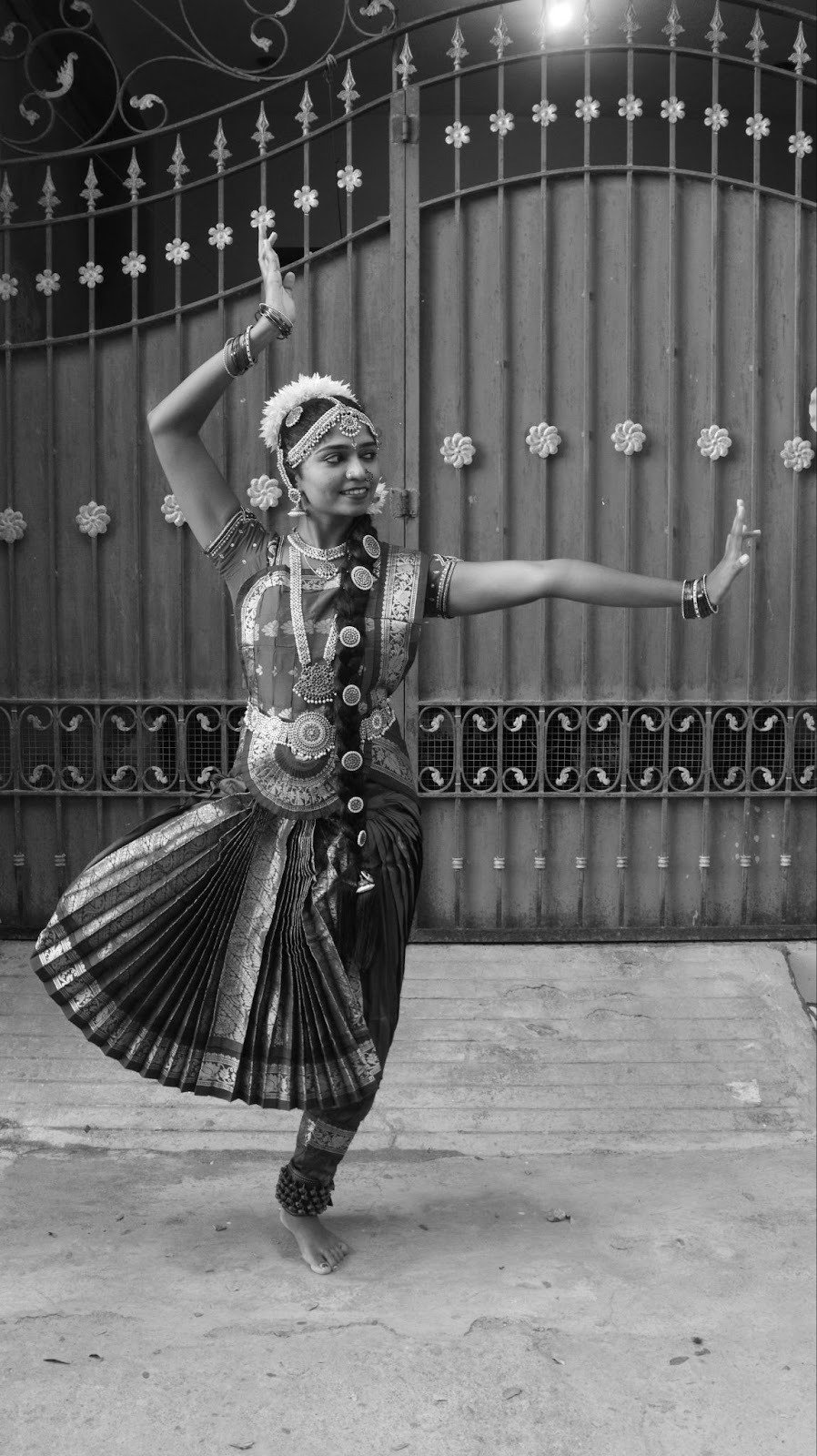
Dhanushiya, a Bharatanatyam dancer
Originating from the sacred temples of Tamil Nadu, Bharatanatyam is one of the oldest classical dance forms that is more meaningful to South Indians. A seamless blend of expression, rhythm, and grace that transcends time. Bharatanatyam is a form of worship, an offering to the deities, performed by temple dancers, communicating with the divine through their movement. Since this divine classical dance form is said to have originated by “Natraja” (The Lord of Dance), it holds supreme belief to the people; therefore, learning and practicing this art form is a way of communicating with the divine.
Seeing Bharatanatyam dancers on the streets of the French town of Pondicherry, I was fascinated by their costumes and the art form. I always admired classical dancers and their discipline towards their art. Coming across one such dancer closely, Dhanushiya, who practiced Bharatnatyam for twelve long years, learning and mastering it, gave me an opportunity to delve into a dancer’s life.
Dance is worship
Dhanushiya started dancing at the age of seven when her parents enrolled her in a dance institution. “Bharatanatyam is a form of worship, and we respect the art form initiated by Lord Nataraja. I don’t think I would feel the same energy in any other dance form, which is why I chose Bharatanatyam,” Dhanushiya shares when asked why she chose Bharatanatyam over any other dance form.”
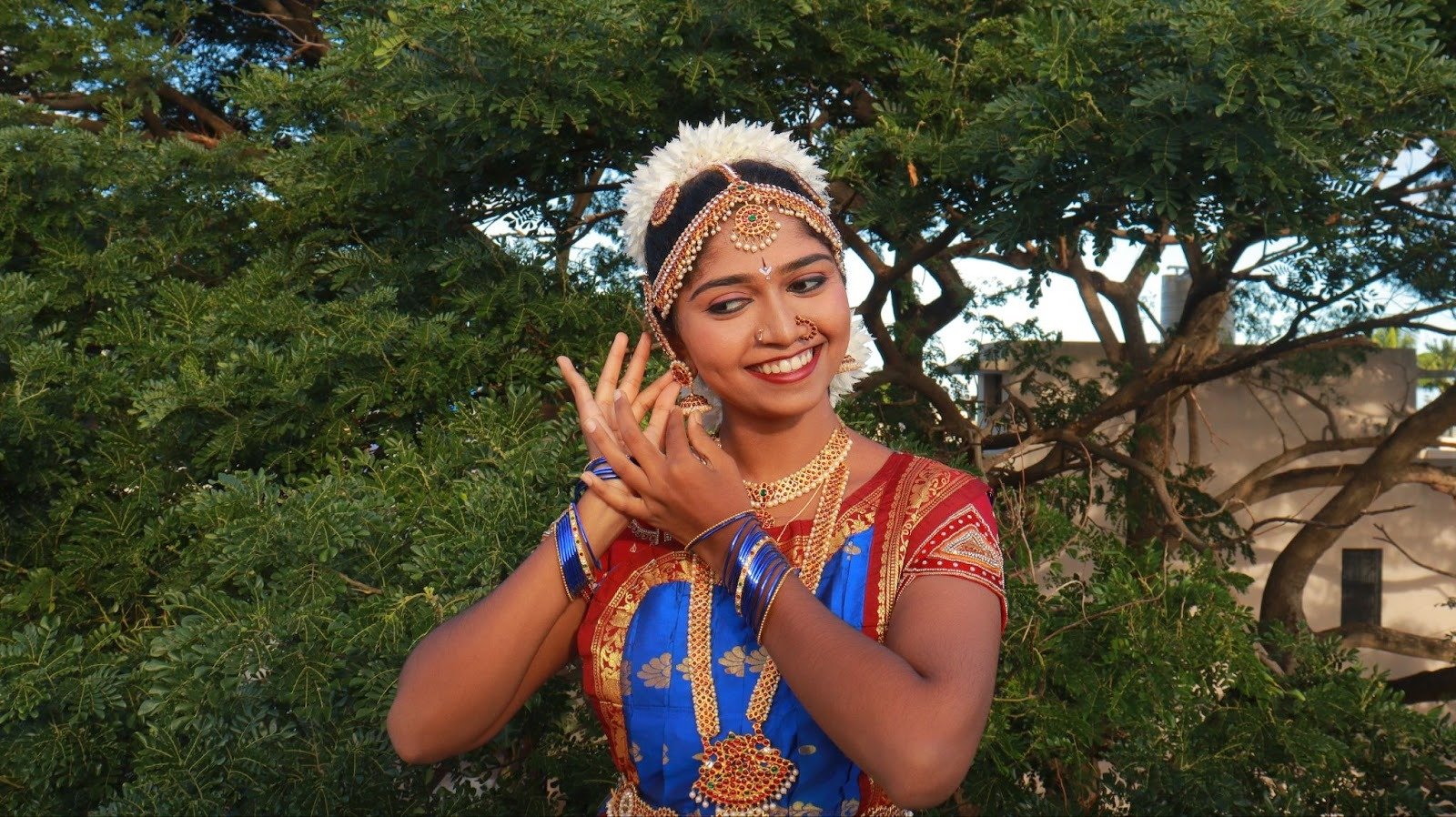
Dhanushiya, in her dancing attire
Being a student at Pondicherry Kalakshetra helped her get opportunities to perform at places like Rock Beach, temples, Christmas programs, and other events. “I’d perform at almost every event in school and college,” shares Dhanushiya, recalling her school days. Dr. Ranjani Rajamaikyam and actress Shobana were her inspirations to pursue Bharatanatyam. She shares that she was always fascinated by classical dancers performing on stage, and seeing them made her envision herself in their place.
Discipline is the key
Almost every Indian classical dance form requires discipline to master. Bharatanatyam, in particular, involves a long process of learning, often taking at least eight years of rigorous practice. Discipline, along with a proper diet that accommodates bodily changes, is essential for continuing to pursue the dance form. As a result, dropout rates are high. Although children may begin learning Bharatanatyam either through parental encouragement or personal choice, very few are able to sustain and complete their Arangetram (the last stage of Bharatanatyam), often due to academic pressures or difficulties in maintaining themselves physically for the demands of the dance.
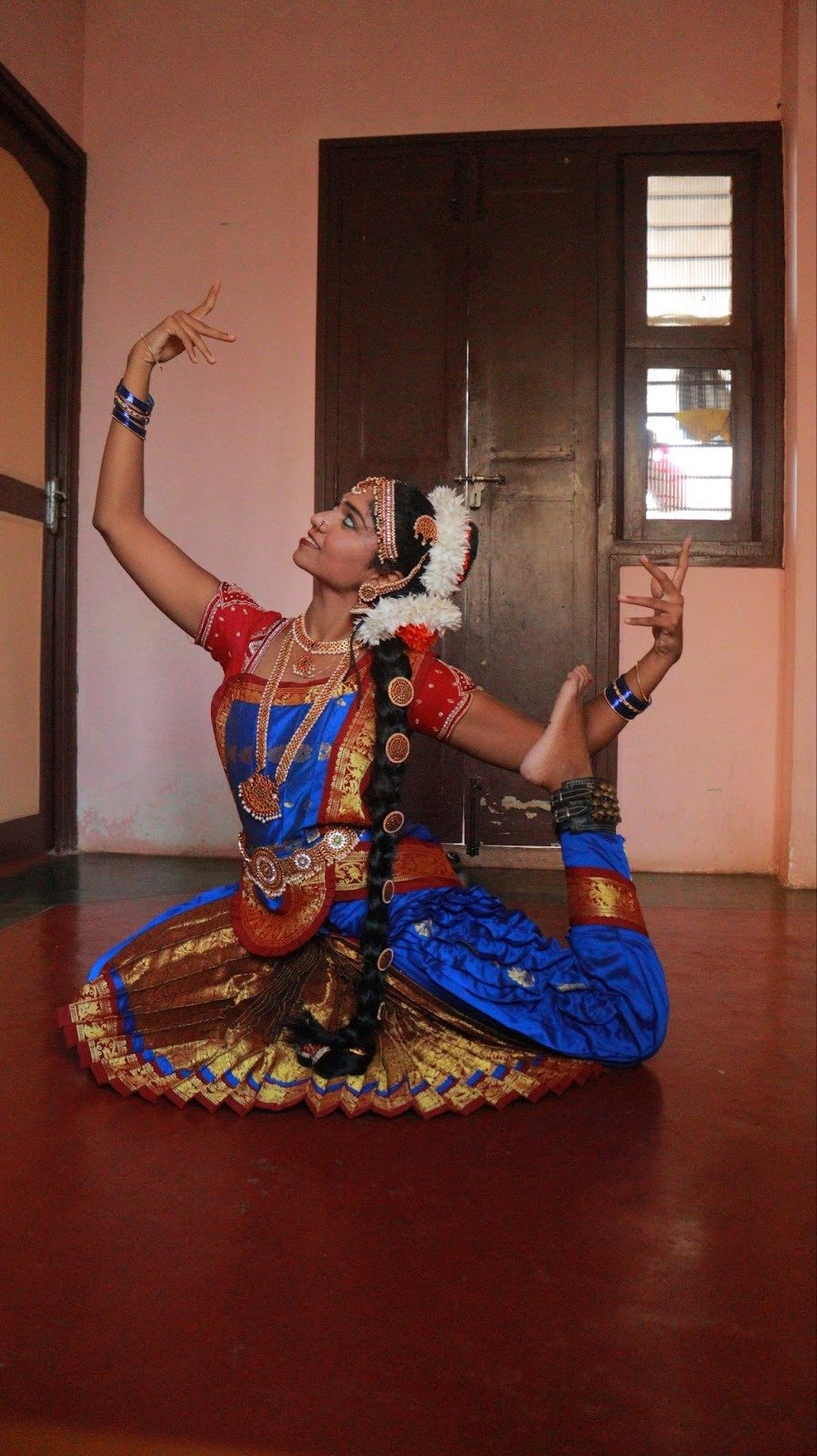
Dhanushiya attained her Arangetram at the age of twelve
Salangai pooja
Salangai (ankle bells, or ghungroos) pooja is a traditional ceremony in Bharatanatyam where a dancer is formally presented with the Salangai by their guru, marking their progression from the learning stage and symbolising their readiness to perform in front of an audience. “A dancer should know how to perform the basic steps, expressions, mudras & talas, such as Pushpanjali, Alarippu, Jatiswaram, Shabdam, Varnam, Padam, and Tillana (a set of dances), along with ragas like Abheri, Nattai, and Mohanam, as well as talas like Adi and Tisram, to qualify for the Salangai Pooja. It’s a spiritual ceremony where the Salangai is worshipped, and the guru presents the ankle bells to the dancer as a mark of their learning progression,” explains Dhanushiya.
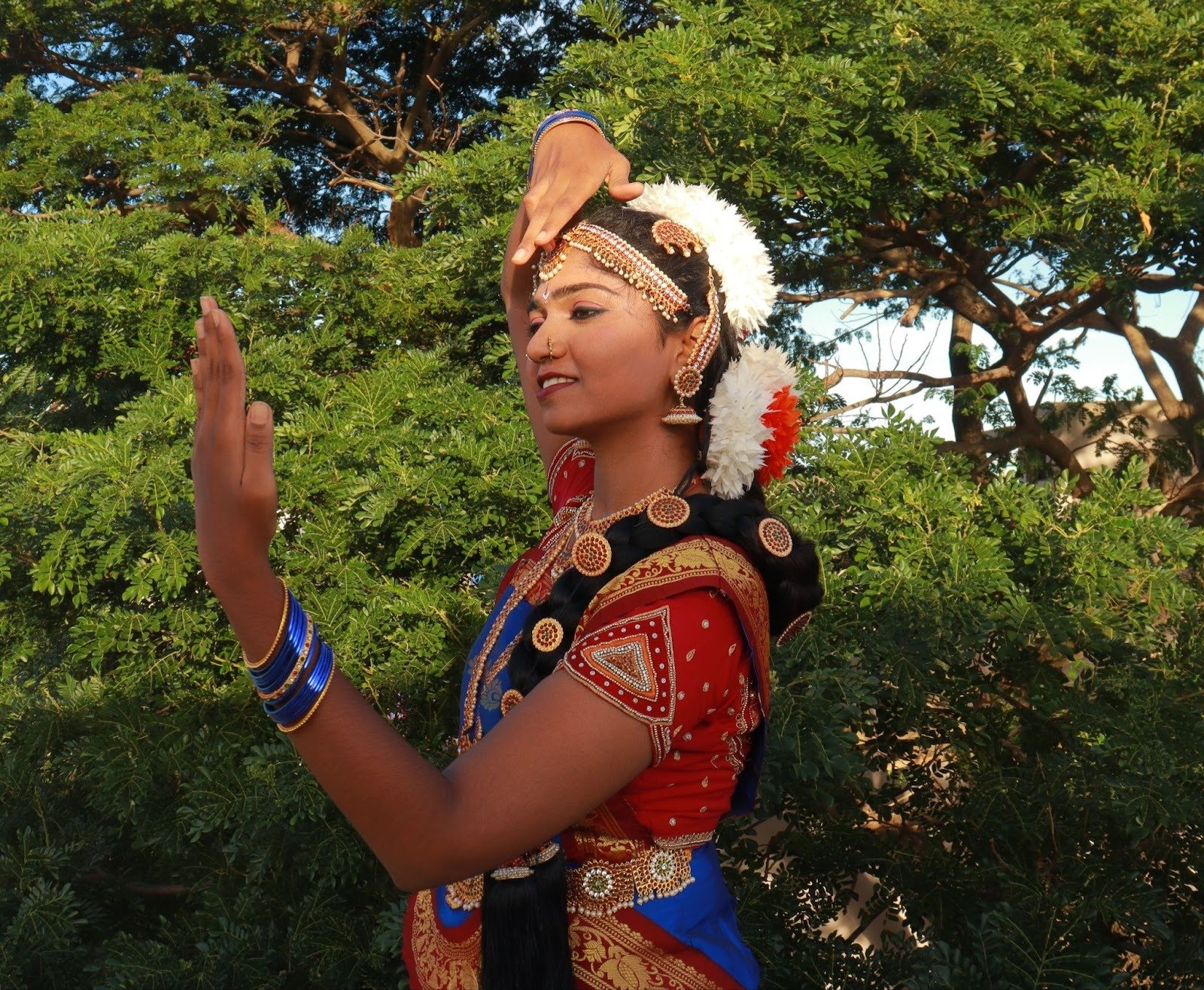
During Salangai Pooja, a three-step Salangai is given to the dancer
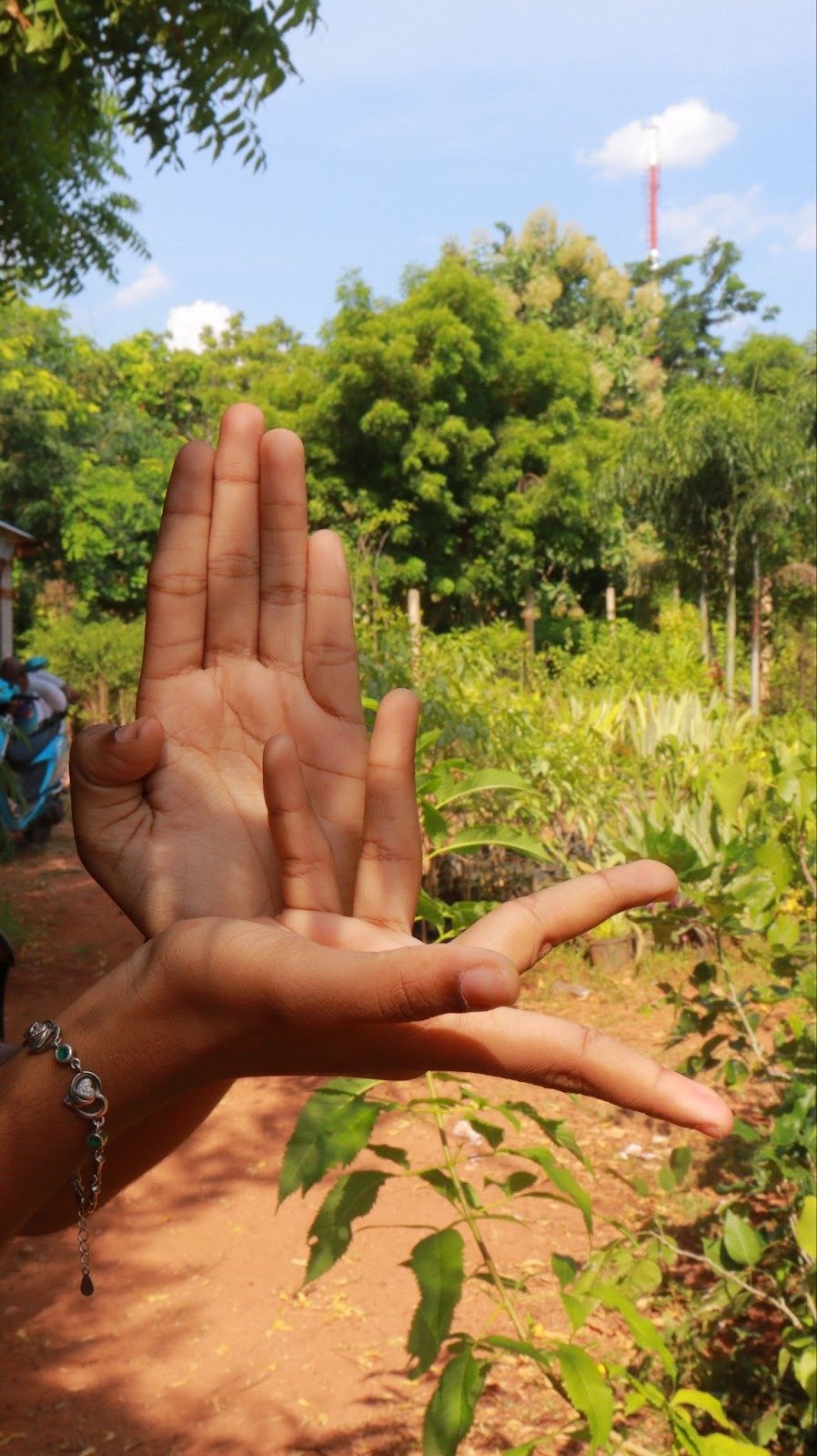
Kartari Mukha Mudra
Arangetram
‘Arangam’ means stage, and ‘Etram’ means to ascend. Arangetram is a significant milestone in the life of a Bharatanatyam dancer, marking their graduation from years of rigorous training. After completing two years of Salangai Pooja, dancers begin preparing for their Arangetram. “A dancer has to perform the ‘Varnam,’ which lasts for 90 minutes, to complete their Arangetram. This represents the dancer’s ‘ascending the stage’ to perform publicly,” explains Dhanushiya. The ceremony consists of the Bharatanatyam repertoire, where the dancer is accompanied by a live orchestra, signaling to the audience that the dancer is now a professional and can perform publicly on stage or teach the art form.
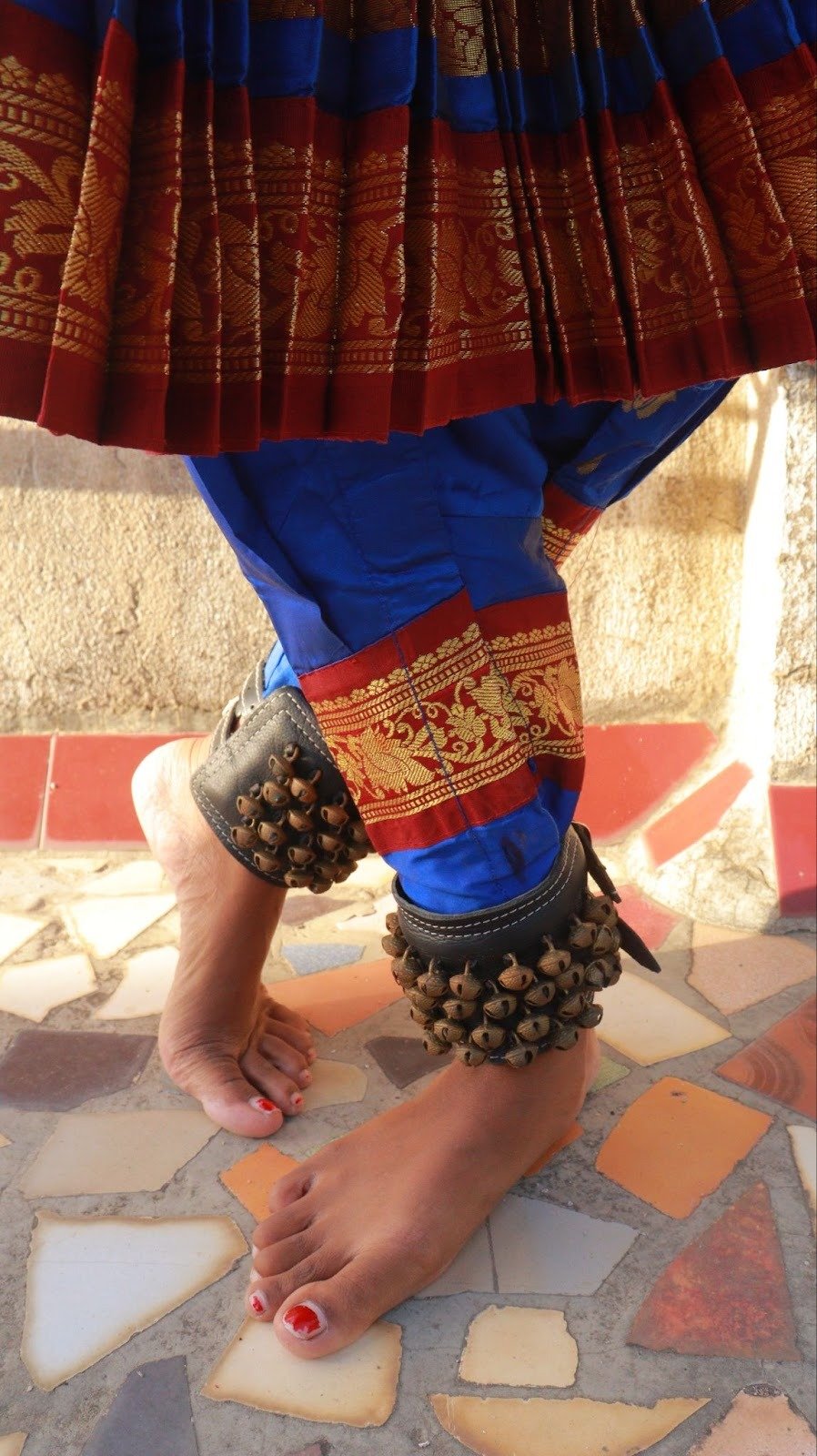
The dancer is presented with the 5-step Salangai
Dhanushiya’s contribution to the art form
“The best contribution an artist can make to their respective field is to teach the art to the next generation. This is how we artists keep the art alive and pass it to generations,” states Dhanushiya as she explains that she also aims to open her dance institute where she can teach kids Bharatanatyam in the future. She feels excited while explaining how she wants to fulfill her dreams.
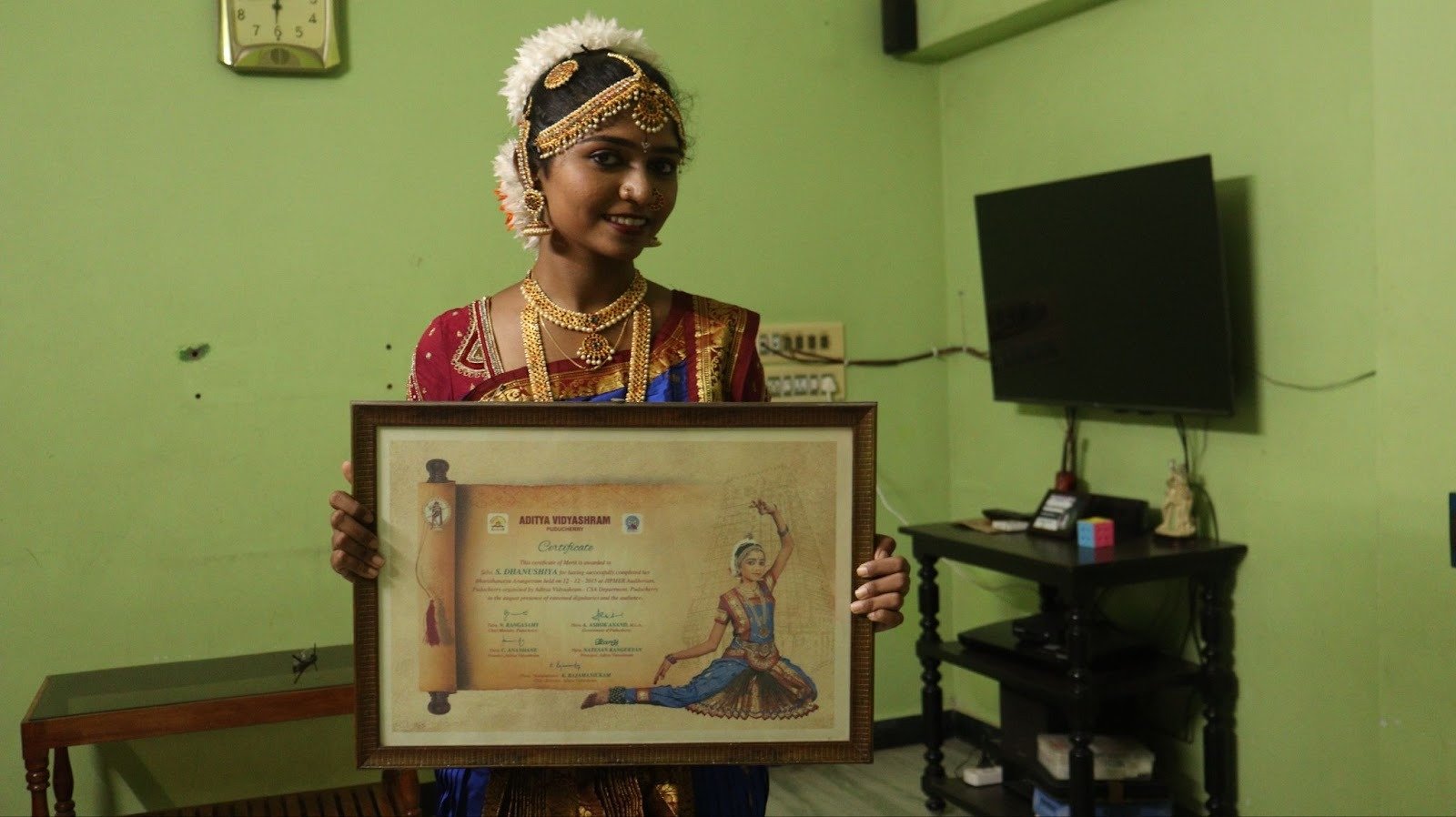
Dhanushiya showcases her Arangetram certificate
Representation of classical dance forms in mainstream media
Amid the influence of Western dances, only a few show interest in learning classical dance forms. However, Bharatanatyam remains culturally popular, and the number of Bharatanatyam dancers worldwide reflects this. Despite its popularity, children today often find it easier to learn Western dance than classical forms, as mastering a classical dance like Bharatanatyam demands a great deal of discipline and respect for the art. Unfortunately, classical dance forms receive less representation in mainstream media compared to Western dance styles. As audiences increasingly gravitate toward Western dance, there are fewer people who watch and appreciate classical performances. Nevertheless, there is still hope. Individuals like Dhanushiya continue to learn and dedicate themselves to Bharatanatyam, aiming to pass the art form on to future generations, ensuring it remains vibrant and alive.
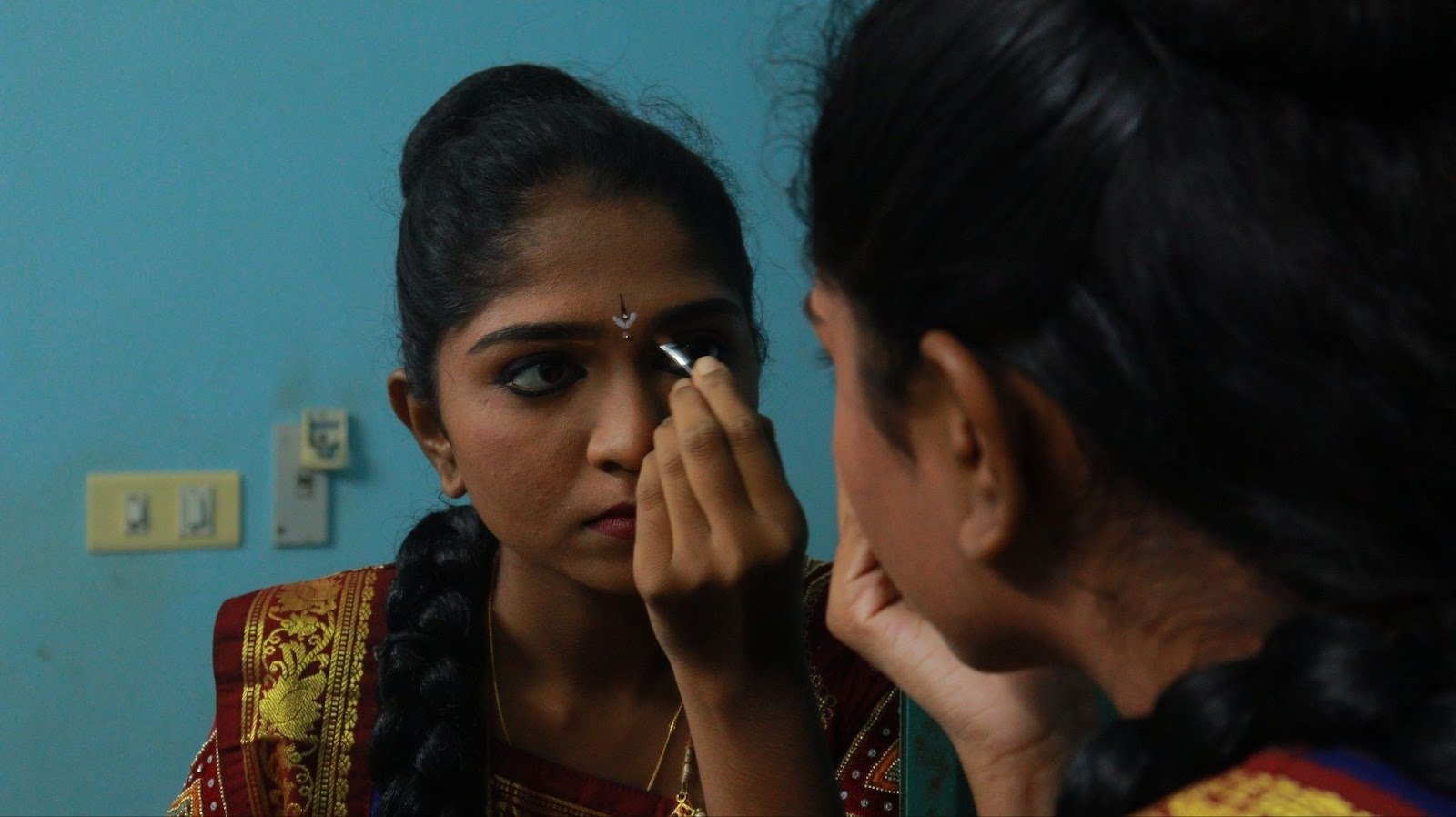
It takes nearly two hours for her to get dressed as a Bharatanatyam dancer
Curated by: Sayni Khatun & Ankit Raj