
Wheel and Will: Stories Molded by Hand
By: Rupam Shukla
Pondicherry is famous for its scenic beaches, vibrant culture, and colonial charm, but there’s a quieter, less talked-about side to the coastal town—its deep-rooted craft heritage. Beyond the touristy exuberance, it’s home to artisans whose hands transform raw clay into intricate pieces of pottery. Yet, despite the beauty of their work, the story of the craftsmen often goes untold.
I had the privilege of sitting down with one such potter, a man whose life is shaped by the earthy hum of the wheel and the heat of the kiln. His name is Nagaraj, a master potter who has spent over two decades perfecting his craft. Near the Matrimandir visitor center, the workshop stood alive with the scent of wet clay, the rhythmic sound of the wheel spinning, and the quiet hum of dedication.
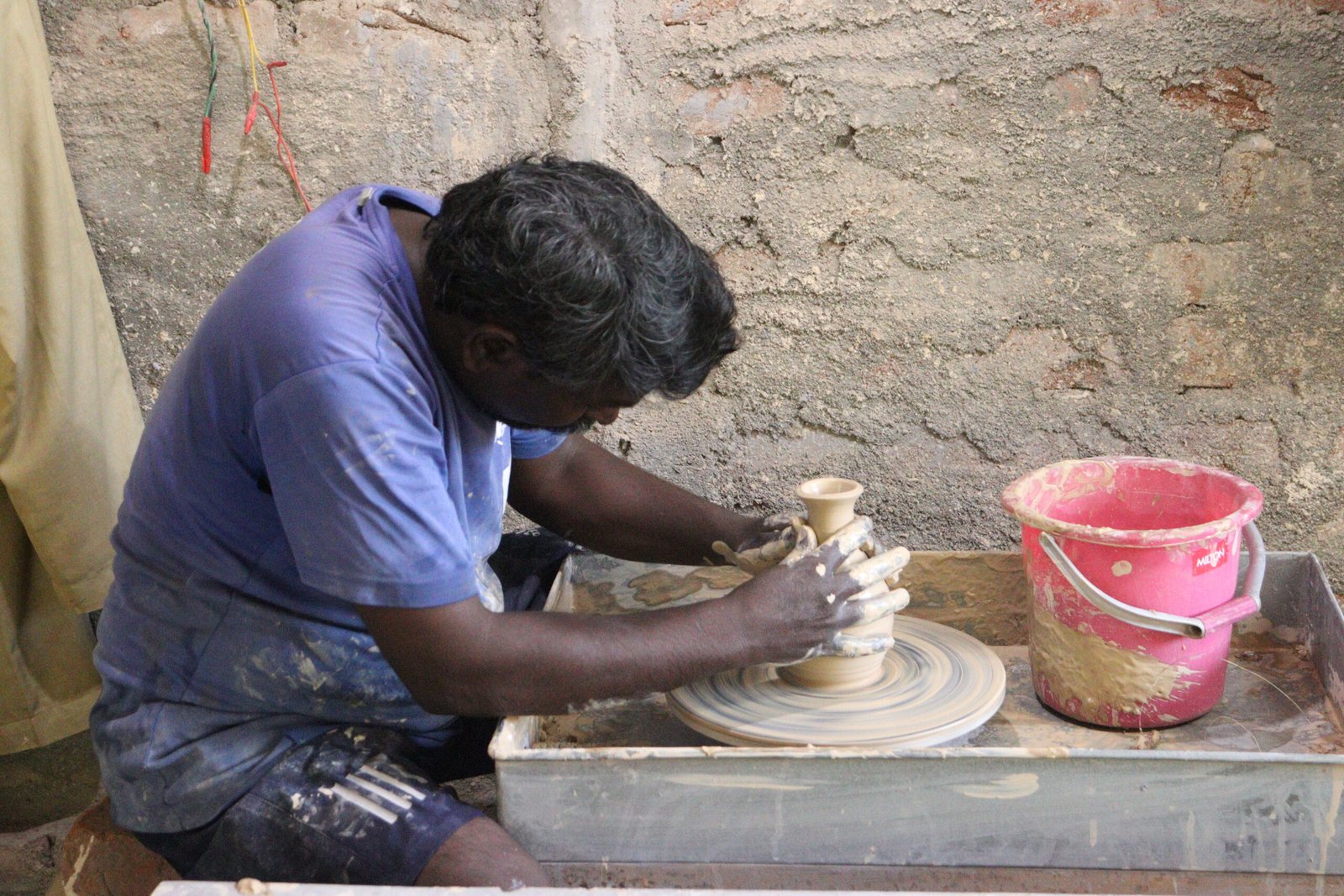
Nagraj immersed in the art of pot making.
The Journey of Clay: A Tale of Patience
Nagaraj sat with a bucket of water and a lump of clay, his hands moving with effortless grace. However, he acknowledged that this mastery was not always similar and has witnessed immense evolution. “It’s not just about moving your hands on clay or the wheel,” Nagaraj started to describe the art of pottery. “It’s a long process. You first need to find the best clay for the type of things you are making. For us, we source most of our clay from Auroville.”
“It starts with the earth, the clay, and you have to listen to it. Sometimes, it speaks to you, you need to calm it and speak to it”. While he explained the entire process, a shapeless lump of clay was molded into a smooth, perfect vase, with each of his movements being purposeful. For him, pottery is more than a profession. “You can’t rush the process. You have to work with the clay. Some people do not wish to touch clay because they might get dirty, but for me, this is my source of living. Sometimes people can’t get food without getting their hands dirty,” he laughed as his fingers danced over the surface.
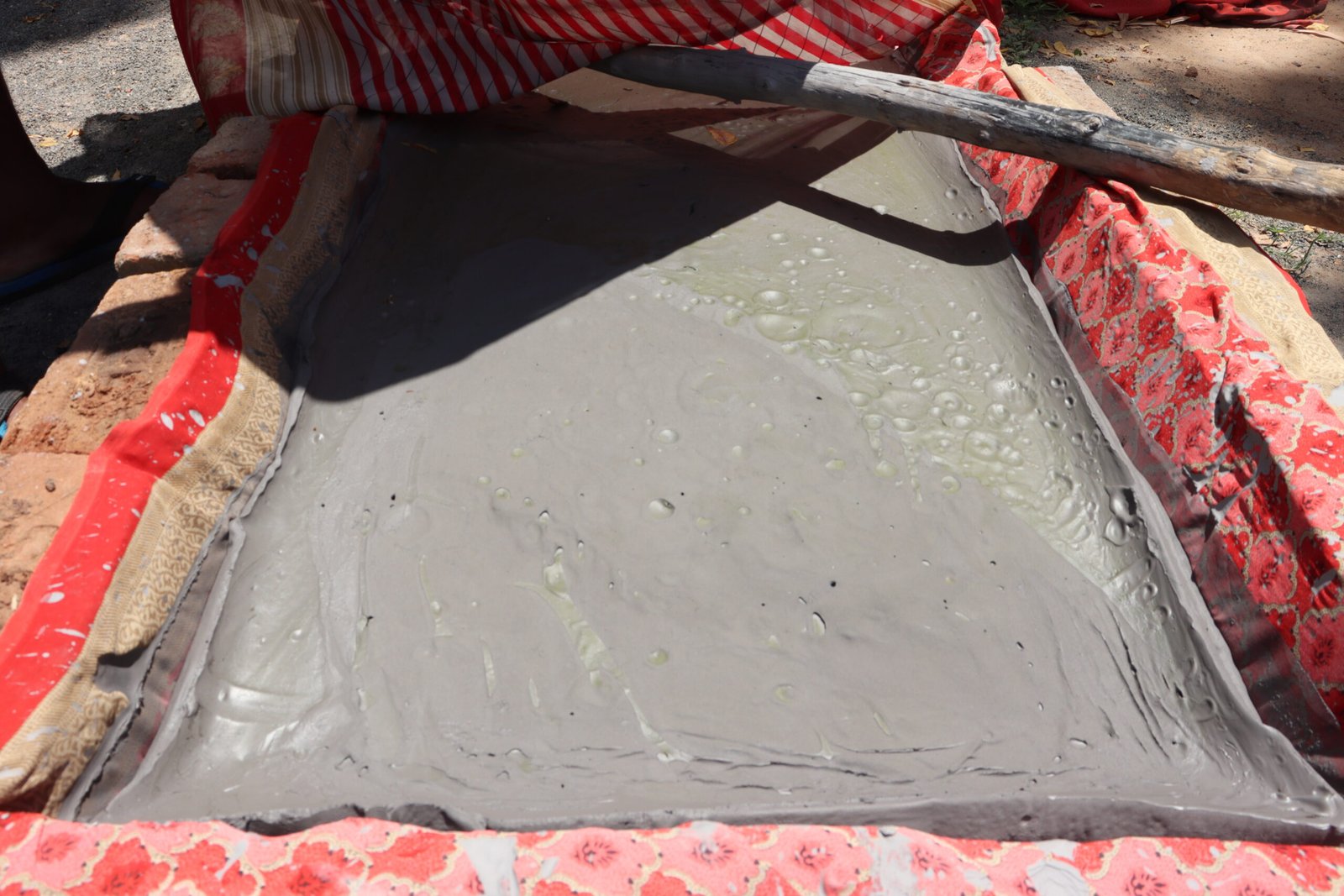
The drying of clay is a lengthy process that takes around 7 days to be completely dry.
After sourcing the clay, the first step is to refine it using a sieve. Potters carry out this process around 6-7 times to ensure that there are no unwanted stone pieces or other particles in the clay. This was actually the stage of pottery making, which gave Nagraj his first job. “Nobody in my family was a potter, and while I was looking for a job, I got an opportunity from a nearby potter to help him with his work. I joined him in 1999, and my work was only to refine the clay. He paid me 8 Rupees for the task daily.”
The next step is to soak the clay in water and keep it under the Sun. Nagaraj typically uses a cloth and keeps it over the clay to ensure that no dirt particles or leaves fall into the clay. Once settled, this clay is then used to make smooth products before finally being fired in the kiln.
“Firing is a very long and time-consuming process. It takes around a week to 10 days to fire an entire lot of orders together,” Nagraj added. He further highlighted that he needs to keep checking the fire time and again to ensure that it does not go out. Once fired well, the pot is then taken out to the coloring table.
Nagraj explained that while coloring is a common element of pottery, what makes him unique is his ability to provide a glazing touch to the pieces. He expressed with pride, “Very few potters in Auroville and Pondicherry can properly use glazing. I have learned from my teacher (the person under whom he worked first). That is why I get a lot of orders, and my work is even sold in places like the Taj Hotel.”
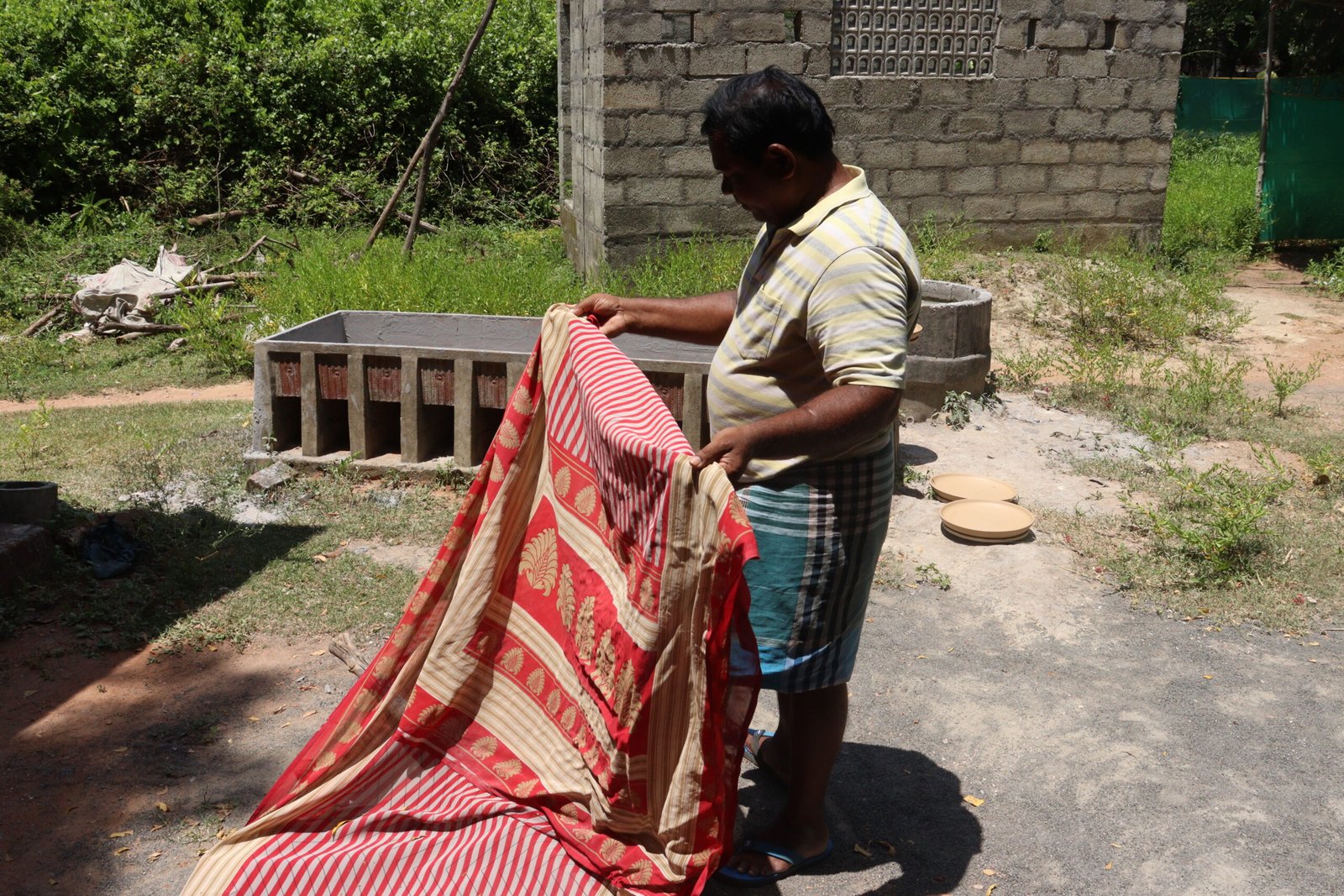
Arumuguam, the business partner of Nagraj, is covering the drying clay.
Nagraj works closely with the Clay and Glaze Pottery Store, located in Ellaipillaichavady. According to Anamika from that store, “Nagraj is one of our finest potters. He knows glazing very well, and that is why most of the big orders we receive are directed to him”.
But it wasn’t always this way.
“When I started, I didn’t know how much of myself I was giving to this craft. There were many failures, many cracked pots,” he laughs, a glint of nostalgia in his eyes. “I was scolded a lot by my teacher. But every broken piece taught me something new, something I needed to move forward.”
The Unsung Work Behind the Art: A Day in the Life of Nagraj
As Nagraj shares his journey, the unseen effort behind the beauty of pottery becomes more evident. “Most people think we just sit and make pots all day. They don’t see the long hours of preparation—digging the clay, mixing the right textures, and waiting for the perfect moment to fire it,”
“My back hurts from bending over the wheel, my hands are stiff from shaping the clay, and the heat of the kiln is unbearable sometimes,” Nagaraj touched upon the physical toll that the art puts on his body. However, the reward is worth it for Nagraj, who, like any other artist, gets satisfaction from seeing the finished goods.
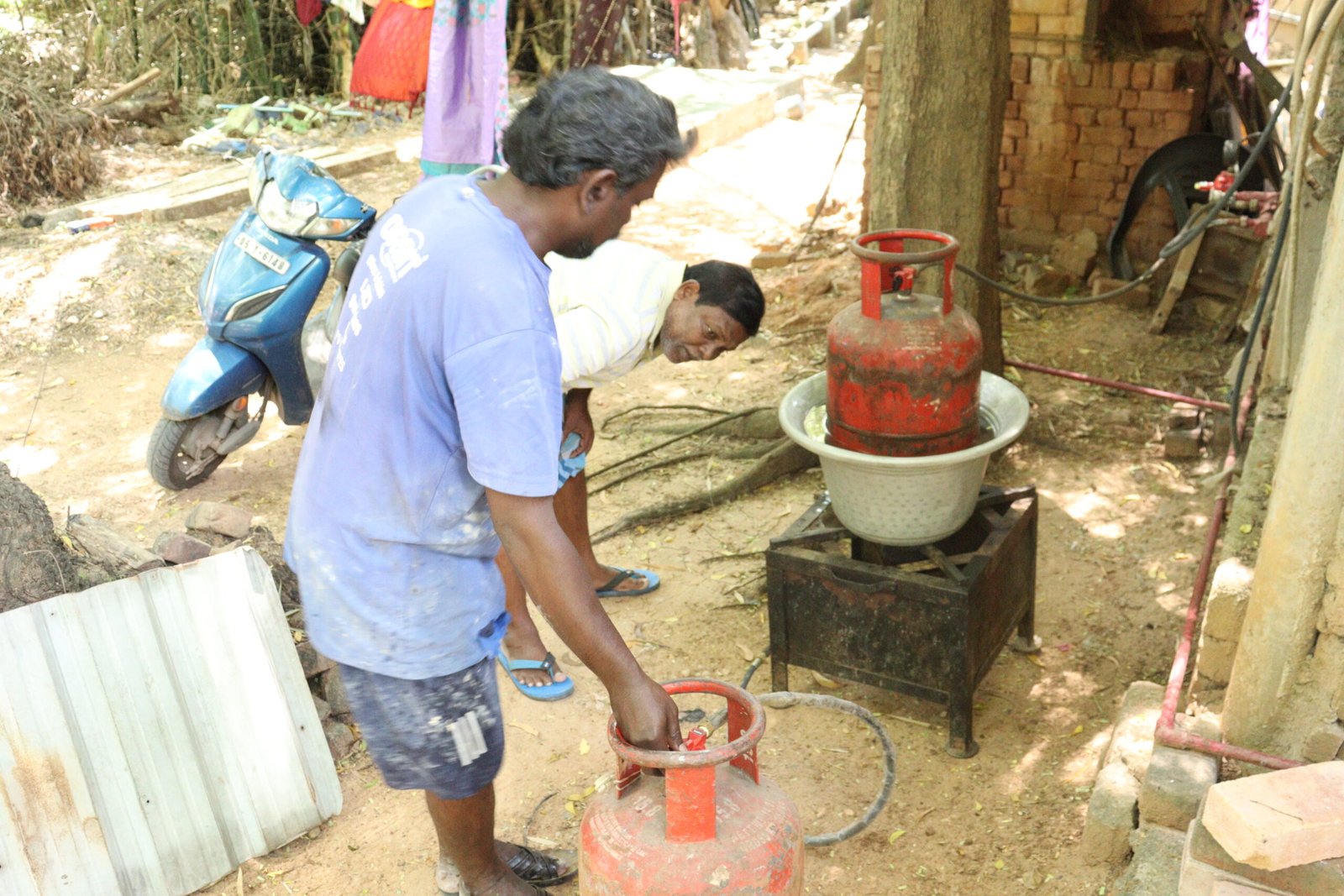
Arumuguam and Nagraj trying to reignite the kiln that is doused.
Pottery is a slow, meticulous art. The drying time, the firing process, and the glazing—all require patience, focus, and refined craftsmanship. “We work in stages. The clay must dry at the right pace, the firing must be perfect; too hot or too cold, and everything can go wrong.”
Yet, despite the intensity of the work, there’s a deep joy in it. For Nagraj, pottery isn’t a job; there is a personal side to the story that makes Nagraj’s determination even more profound despite the hard work that goes into it.
What motivated Nagraj to find a passion for pottery?
“I was looking for a job. Any work would have helped me because I wanted to help my mother,” Nagaraj said. Nagraj does not share a cordial relationship with his father and accuses him of beating up his mother. Nagraj was unable to see the pain and suffering and was ready to take up any job as a growing man. Now 46, Nagraj shared that he wanted to take his mother away from his father’s home and hence, started working at an early age. He eventually succeeded. With the initial wages he received, Nagraj was able to take a small rented house and move in with his mother. “The situation is much different now. My mother and father are no more. I live in a different house now. My wage, which was once just 8 Rupees, increased to 14 when I finally started making pots after a few months, and now I get paid Rs. 450 every day from Auroville, where I work in the evening.” But the majority of his profits come from his own workshop.
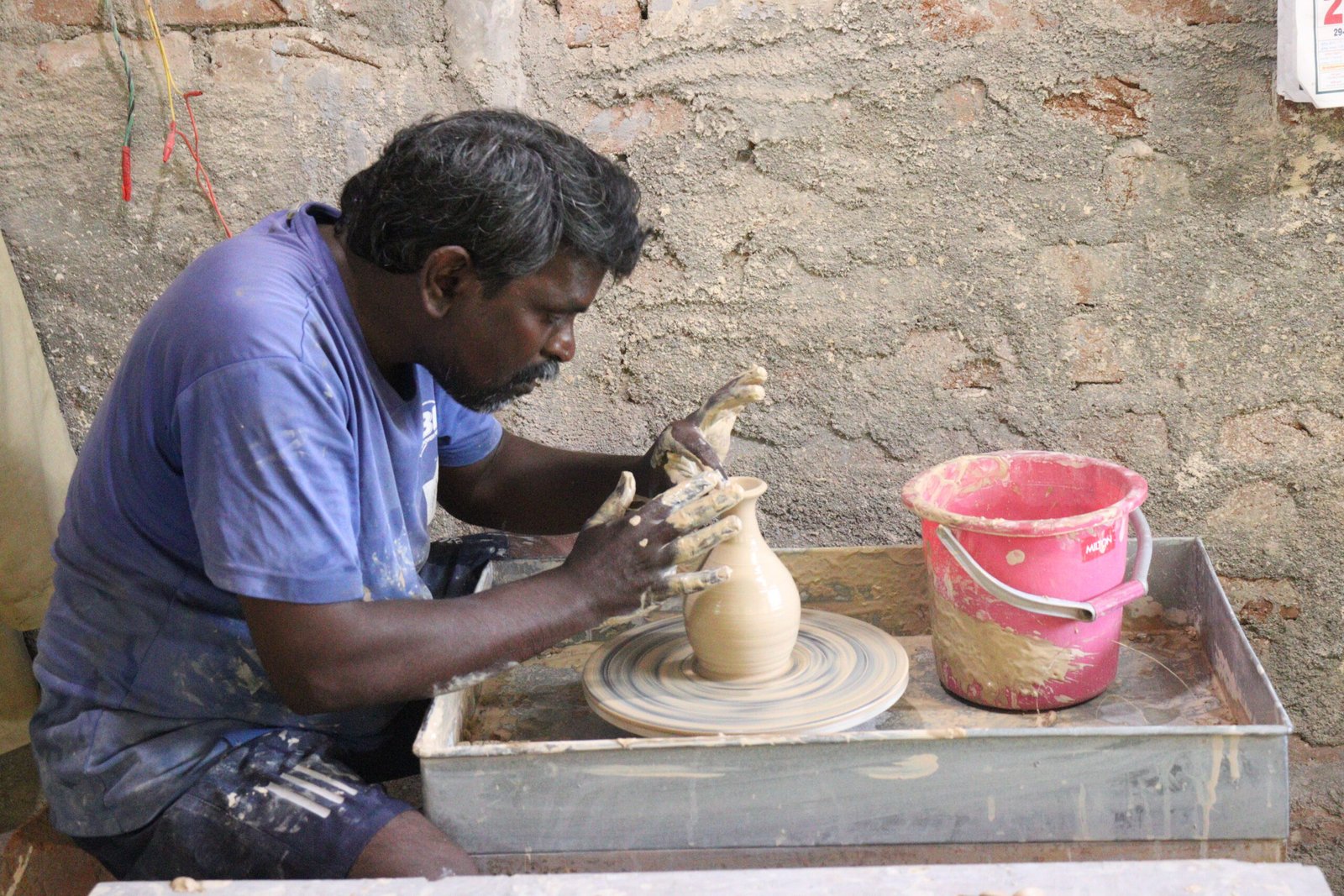
Despite engaging in a conversation, Nagraj did not miss a single step and religiously carved out the vase.
Nagraj’s journey highlights the common struggle of potters working to sustain a slow, demanding craft and to keep it alive.
The Craft in Crisis
“Pottery is becoming a dying art,” he admits. “People don’t value handmade things as much anymore. Mass production is cheaper and faster, but it doesn’t have the same quality.” While he acknowledged that there has been growth after the COVID-19 pandemic, a claim that was also highlighted by Anamika, he says that it is not enough to motivate an individual to take up pottery as a profession.
He speaks of the financial struggles, the lack of recognition, and the constant battle to keep the craft alive in a world that’s growing increasingly impatient with time-intensive work. “We are fighting for our space in the market, against machines and factories. The demand for handmade pottery is shrinking, but I believe the beauty of this craft will never fade.”
Despite these challenges, Nagraj remains hopeful. “There is still a place for handmade things. People who appreciate art understand the effort that goes into it. When people see the heart behind the work, they begin to appreciate the value of craftsmanship. Some hotels are giving us bulk orders that come to us through the studio owners.” He also highlighted the financial aspect of the art that makes it difficult for consumers to buy it.
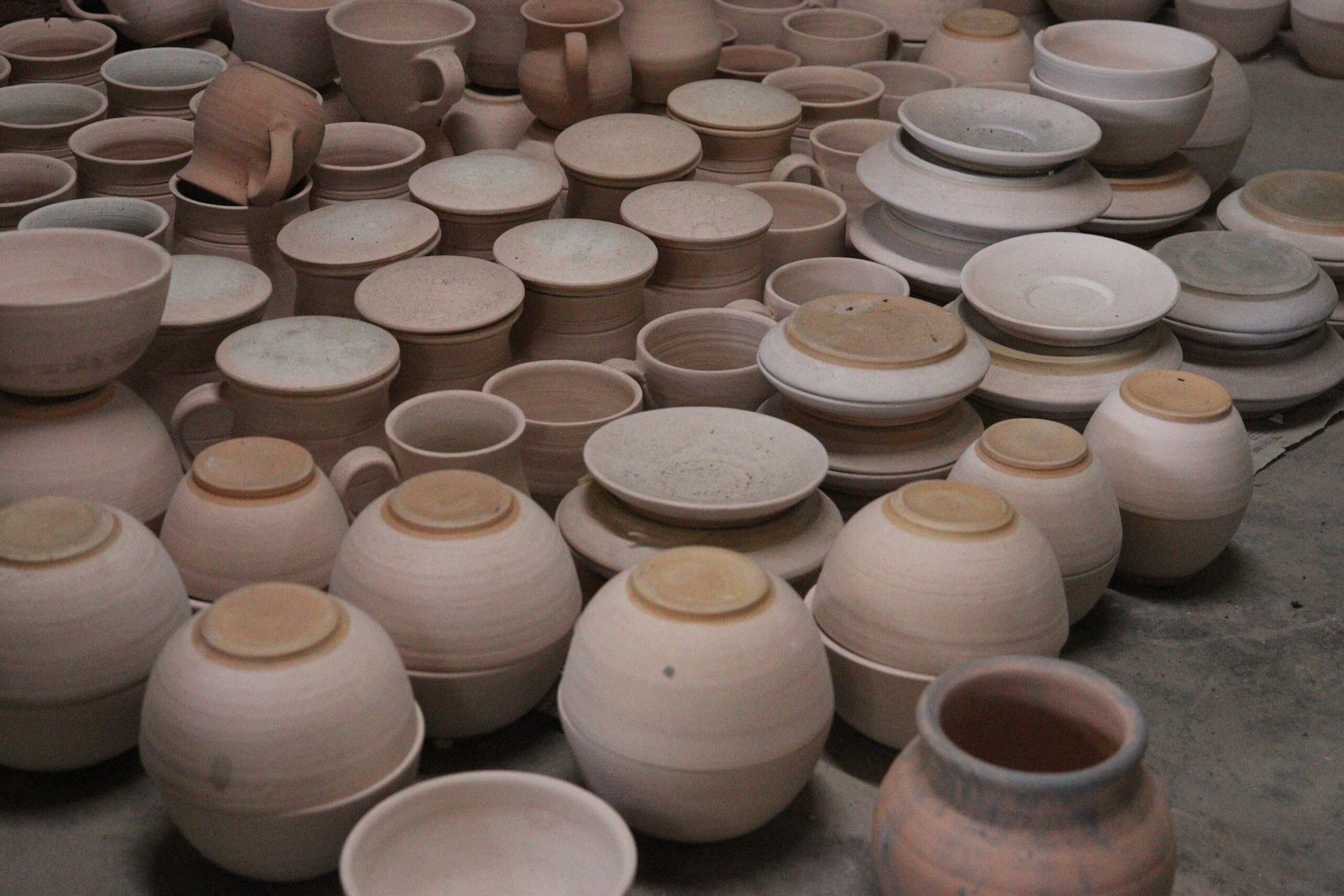
Goods are manufactured, waiting to be colored, glazed and packed for its next destination.
“See, I sell it for around Rs. 1050-1300,” Nagraj said, pointing at a clay plate. He revealed that one truck of clay costs around 2 lakh Rupees. He takes around one-third of it from Auroville, which costs him close to Rs. 70,000. “When the quantity increases, the price goes down, but the studio owners sell it for 2000-3000 and earn a lot of profit. This makes it difficult for consumers to buy from those who shift to other materials.” But Nagraj cannot do much about this. He needs
to operate through the studio owners only because of their wide connectivity. But what happens with the pots that Nagraj makes?
The final destination of the clay
A bulk order of 50 pieces of products or more typically takes 50-60 days for Nagraj to finish, including every single process, packaging, and shipping. This is then shipped to the studios, from where the owners sell it on various platforms.
“I started this business during COVID-19, and since then, there has been no looking back. I got my first order in the Deepawali of 2020,” says Anamika, who sources her material from Nagraj. She sells these products on her Instagram page, website, and even through B2B channels to cafes, hotels, and resorts in not just India but also in countries like Indonesia and the Philippines.
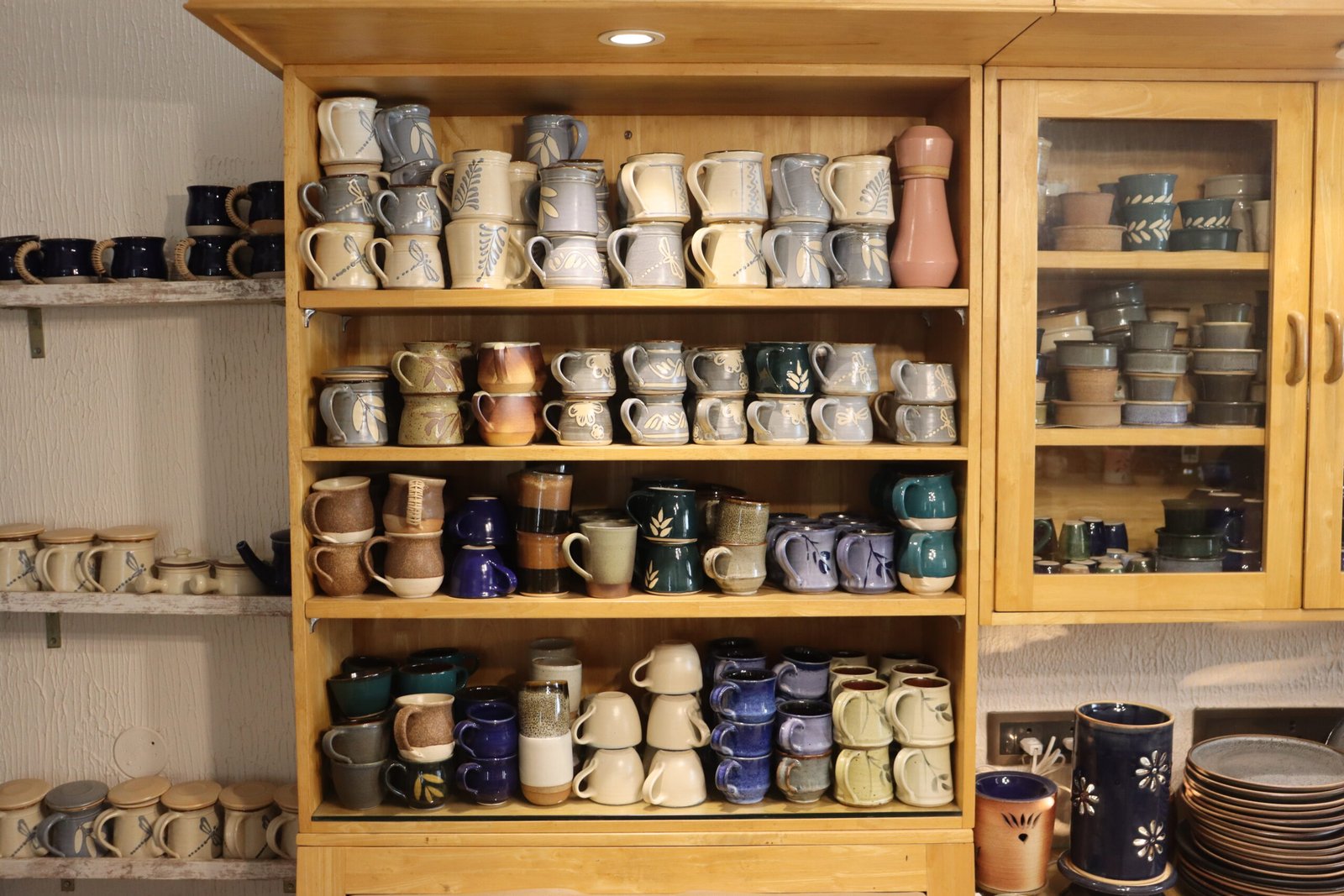
A glimpse from the Clay and Glaze studio, where the final products await their buyers.
She explained that some of these finished goods might often break, but the packaging has to be “solid” to save the consignment from damage. “We often send our own car when the destination is nearby, like in Chennai, Bengaluru, or Hyderabad. But we have our trusted partners whomwe rely upon major outstation deliveries,” she added. Hence, it can be rightly said that a commodity that arises from the workshop of a potter like Nagraj in the village of Pondicherry, soon reaches far-off places not just in India, but around the globe as well.
Honoring the Craftsman
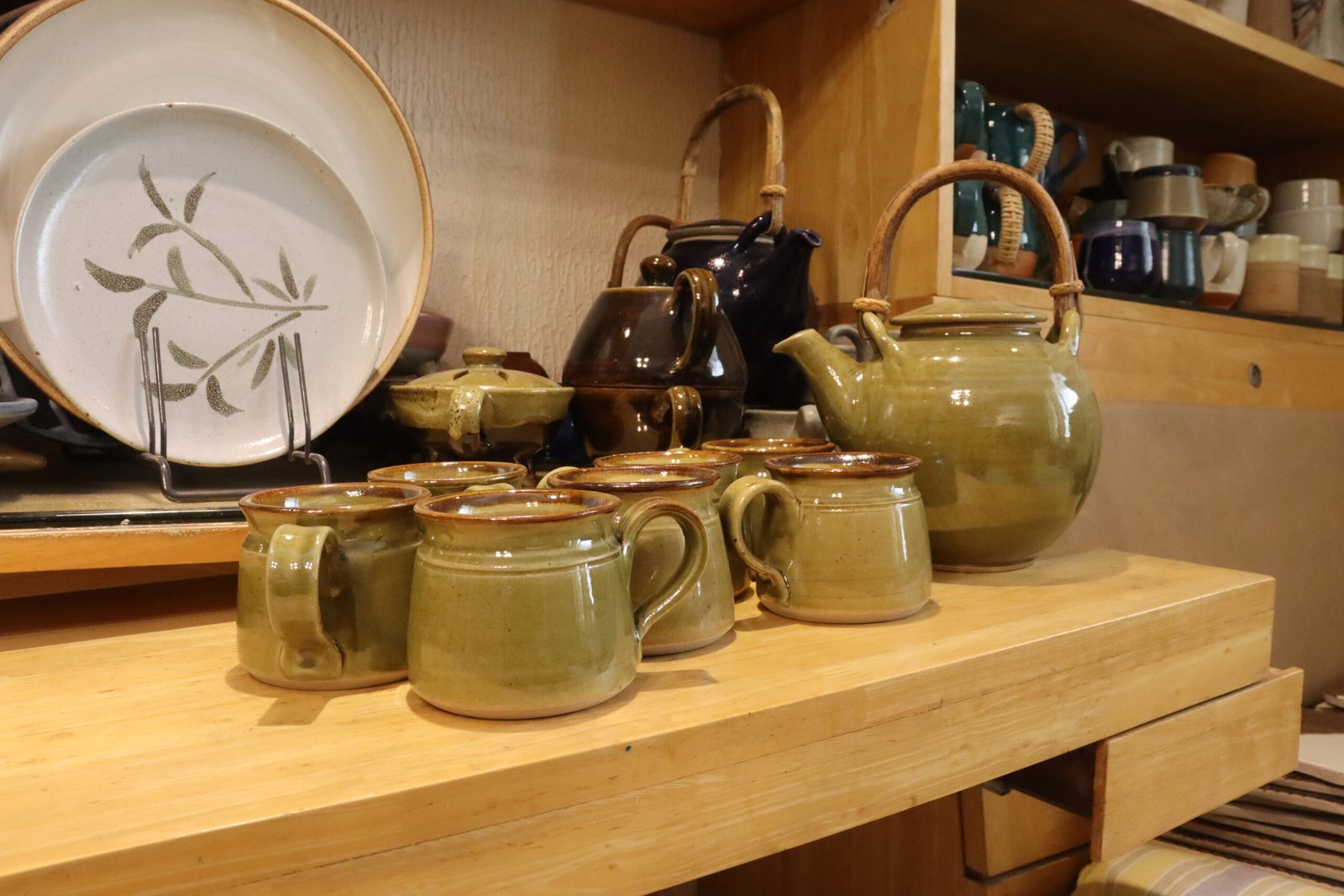
A well-crafted piece of art designed by Nagraj from scratch.
Nagraj smiles as he hands me a small, perfectly shaped vase, its surface gleaming in the light. “This is more than just pottery,” he said softly. Interestingly, I could understand what he wanted to say. The vase was a part of Nagraj, a part of Pondicherry, and now, a part of me as well.”
Curated by: Sayni Khatun & Ankit Raj


