The Wellstory: A Tale of Women & Sustainability
By Harigovind M K
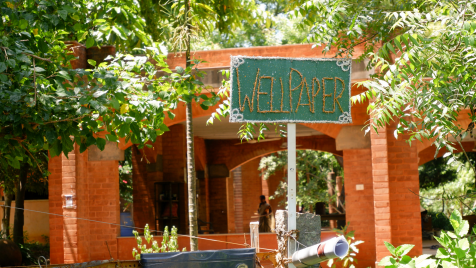
A sustainable place for women to learn and develop skills
In the experimental township of Auroville, Tamil Nadu, ‘Wellpaper’ (Women Empowerment through Local Livelihood) has been inspiring and empowering women for nearly 19 years. This unique social enterprise, which turns recycled materials into beautiful handicrafts, stands out for its dynamic approach, focusing not just on skills training but also on education, personal growth, and women’s empowerment. Despite many challenges along the way, Wellpaper has grown into a model of sustainability and social impact, helping women find financial independence and confidence through their creative work.
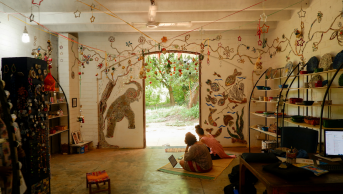
Inside the Wellpaper office, volunteers are busy doing their work
Beginning of Wellpaper
It was in 2004, the tsunami that occurred in Tamilnadu, Wellpaper began in 2005 as a response to this devastation, originally serving as a rehabilitation project for women in Auroville, Tamil Nadu. The initiative was initially spearheaded by an Israeli couple to empower local women by providing them with sustainable livelihoods through skills training and handicraft production.
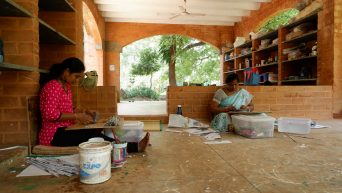
Women artisans Sudha and Rani, making the handicraft products.
The Uniqueness
The ‘Wellpaper’ products are crafted using local waste materials, such as paper and other recyclables, through techniques taught by local artisans. These products are designed to be long-lasting, high-quality, and environmentally conscious, aligning with the mission of WELL to promote empowerment and sustainability. Unlike other enterprises, Wellpaper focuses on the education of artisans and their development. The training for women covers a wide range of topics, including general education, business management, hygiene, yoga, meditation, etc. There are volunteers to help women manage stock, plan organizations, and even focus on personal development through many activities. Workshops and training programs are also a big part of the WELL. Women of Wellpaper have conducted workshops in many parts of the country. WELL ensures that the women leave the program not only with the skills to produce goods but also with confidence, resilience, and a sense of community.
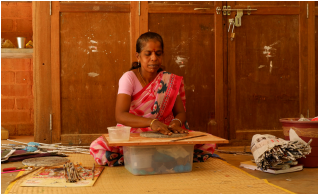
Chithra is engaged in making the handicraft product
Women and the Community
Women are the backbone of the project. They handle production, lead workshops, and are part of the decision-making process in everything from development to pricing. WELL operates on a unique model that avoids traditional employer-employee relations. There’s no hierarchy – no boss, no rigid structure. The women get paid based on the products they create or the workshops they run. The volunteers support them with marketing, administration, and anything else they need, but the women manage their own organizations and accounts. The organization also emphasizes respect for local culture and artisans. The volunteers believe that they are guests here, and they must respect the local women and culture. They learned from local artisans, incorporating traditional techniques into the products, blending contemporary and conservative designs.
Staff members at work
Surviving the Pandemic
The Covid-19 pandemic severely affected Wellpaper, forcing the center to shut down completely. Around 60 working women and thousands of customers were reduced to zero, leaving the enterprise to start from scratch after the pandemic. The founders and volunteers reached out to the women to help rebuild the organization, and they are currently working towards its fullest revival. Although Wellpaper received some donations during the rebuilding process, the founders prefer to rely on the sustainability of the project rather than on donations, which can be unstable and may impact long-term growth.
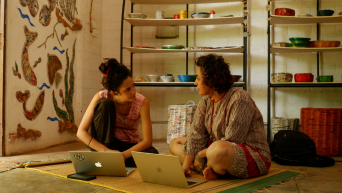
Volunteers Nusha and Fiona are having a conversation.
Sustaining the Future
Currently, Wellpaper has six women workers and a few volunteers actively contributing to the project. However, before fully re-establishing Wellpaper to its former capacity, much groundwork remains including strategic planning, reconnecting with old customers, marketing efforts, and stabilizing administration. Rather than solely focusing on production, the team plans to prioritize educating women through workshops, which will not only empower the women but also increase the project’s visibility. There are around twenty skilled artisans in the village who found new jobs during the pandemic, who are interested in returning, with some already approached. It’s only a matter of time and preparation before Wellpaper regains its strength and expands further.
Curated by: Sayni Khatun & Ankit Raj