Buddha Purnima: How Buddhism Became A Beacon To The World, Emphasizing Dharma
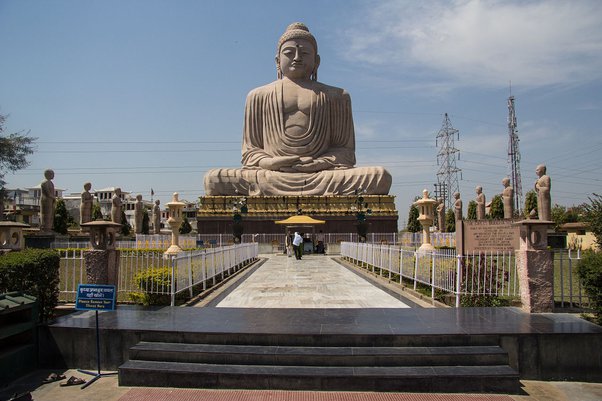
Statue of Buddha at Bodh Gaya, Bihar | PC: Tanmay Gupta
“Buddha” is a concept of social justice, peace of mind, and self-awareness. Buddha Purnima hugely influences people’s lives. Gautam Buddha’s birth anniversary occurs on this auspicious day.
This day is celebrated as being thrice blessed: The first one is the Purnima Tithi/day (full moon day) in 563 BC, when Lord Buddha was born in Lumbini (modern-day Nepal); the second is the day he gained enlightenment after 49 days of incessant meditation beneath the Bodhi tree in Bodh Gaya, Bihar; and the third is his Maha Paranirbana, when he was released from the wheel of birth and death. Apart from being referred to as Buddha Jayanti, Vaisakha Purnima, Saga Dawa, and Vesak, it is also a Day of Enlightenment, and Buddha Purnima is celebrated.
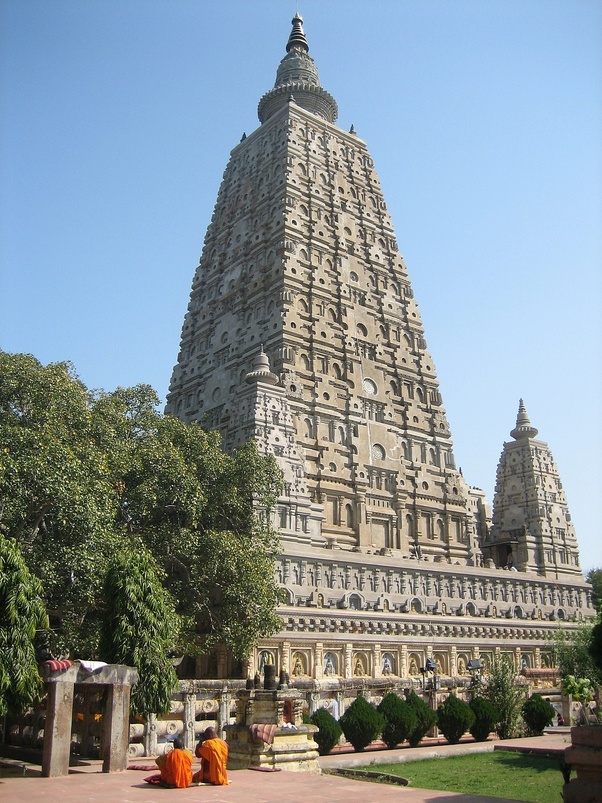
Meditation Temple of Buddha at Bodh Gaya, Bihar | PC: Tanmay Gupta
It was said that Buddha’s aunt Gautami, brought him up after his mother died seven days after his birth. A seer had foretold that the child would become a Chakravarti king, but that if he lost interest, nobody could prevent him from being a Buddha, and the earth would be charmed for all eternity.
The Buddha considered his description of dependent origination as a “Middle Way” between “annihilationism” (ucchedavada, the theory that we completely perish at death) and “eternalism” (sassatavada, the theory that there exists some abiding essence). From this view, individuals have no independent or abiding self and are only a causal chain of impermanent psycho-physical conditions, or annata. Rather, the Buddha was of the view that everything in the world we inhabit is transient and that nothing about a person remains constant. “Everything is process” is the position of the Buddha, says Richard Gombrich, the renowned British Indologist.
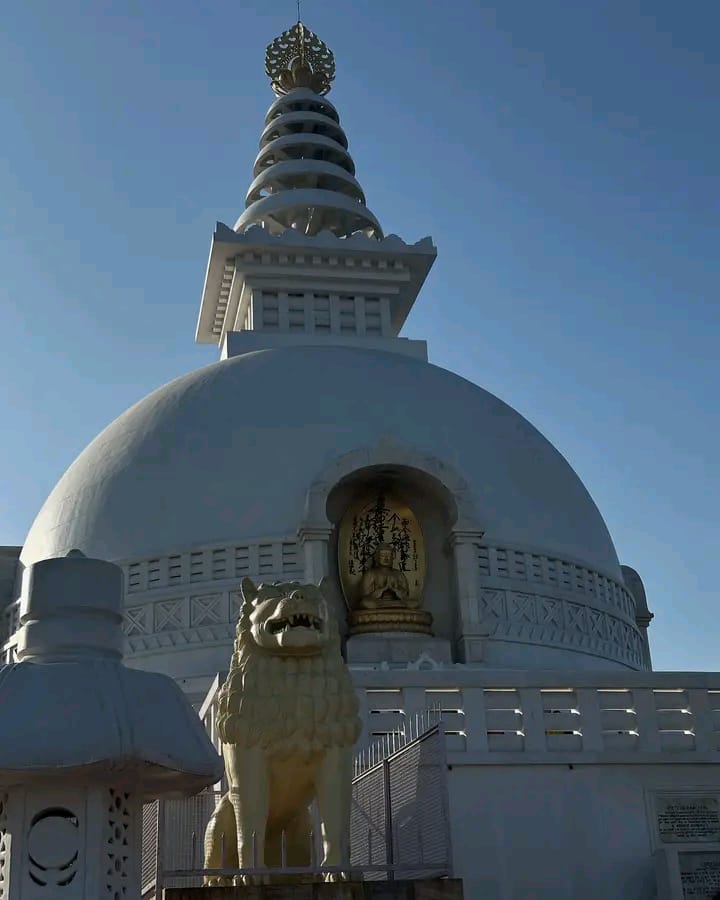
Vishwa Shanti Stupa, Rajgir, Bihar | PC: Tanmay Gupta
A Buddha is one who has attained Bodhi, which is wisdom—the ultimate stage of moral and intellectual excellence attainable by man through human means alone. Buddha means “enlightened one,” or “knower.”
The teachings of the Buddha are meant to end suffering for sentient beings. The Three Universal Truths, the Four Noble Truths, and the Noble Eightfold Path are the three core teachings of Buddha that are the foundation of Buddhism.
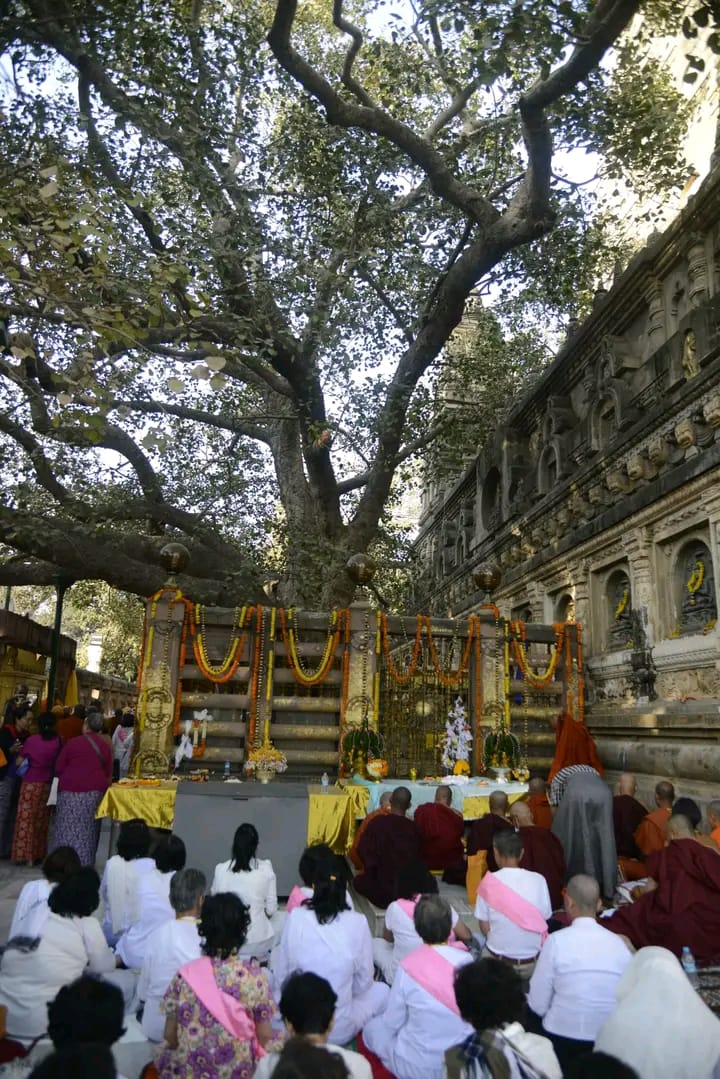
Bodhi Tree: a sapling from the tree at Bodh Gaya, Bihar | PC: Tanmay Gupta
Take the noble eightfold path: the right view, the right thought, the right speech, the right action, the right conduct, the right effort, the right mindfulness, and the right concentration. To not inadvertently fall into one extreme, though, don’t demand what is good and evil. Essentially, you will suffer more the more desire you have. The need to be right is part of that. It is arrogant to demand to be right; arrogance gives rise to grief or anger, which gives rise to misery. When desire ceases, suffering ceases.
You get no religious teaching from Buddha. Whatever you are, he just wanted you to be yourself. Being oneself is one’s faith. Freedom has never been so precious to a man. No human being has ever demonstrated such commitment to mankind. He did not accept disciples for the simple reason that to do so would have lost him his self-respect. He accepted only fellow travelers. “If I ever return, I will return as your friend,” he uttered in his last words before he died.
Article by Tanmay Gupta – BA Media and Communication