LIFE AT THE SEA
By Shamna AK
Meet Majeed, a fisherman from Parappanangadi, whose life revolves around the sea. Since he was 15, Majeed has faced the challenges of being a fisherman, creating a deep connection with the ocean that sustains his community.
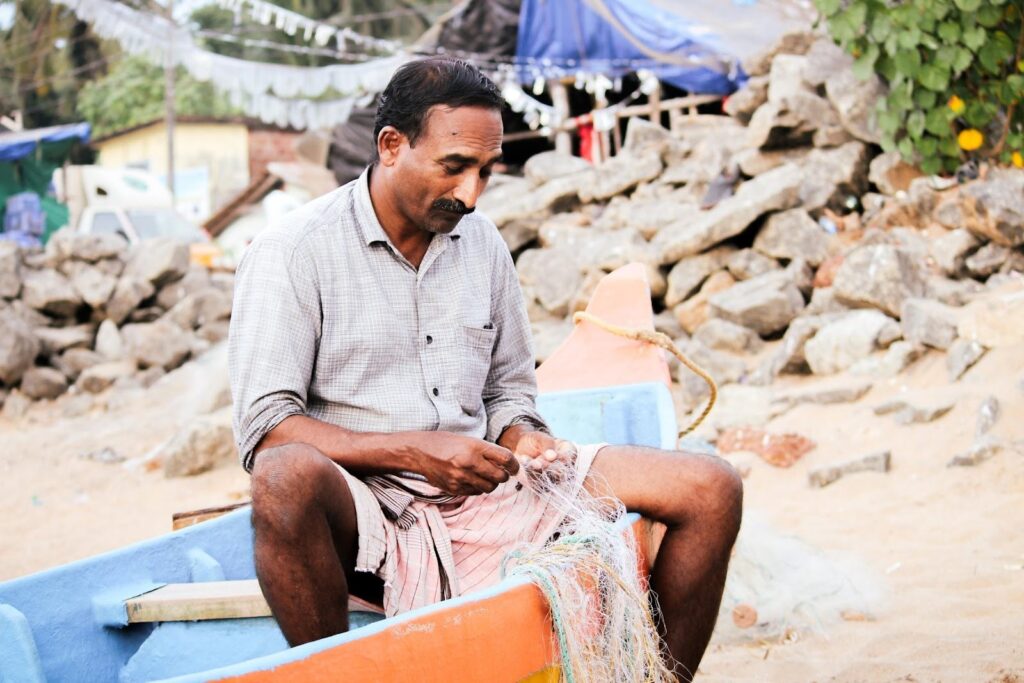
Majeed, the fisherman, skillfully tending to his net, crafting stories with every knot against the backdrop of the vast sea.
“When I was only 15, I started fishing. Living in a fisherman’s home, it felt like the right thing to do. All the kids here start learning all about fishing early – from fixing nets to understanding how the sea moves. Our childhood is all about the ocean, with waves as our lullabies and the boat as our playground. Fishing is more than just work; it’s a lifestyle we inherit, making a special connection with the sea that every child here feels in their heart.’’
Every day, Majeed carefully checks the fishing gear, making sure the nets and lines are in good condition. Traditional materials, such as ropes and nets made from natural fibers, are commonly used. He readies his boat, typically a wooden vessel, by ensuring it’s in proper working order. This might involve inspecting the hull, checking the engine, and making any necessary repairs to guarantee a safe journey. He gathers essential supplies, which often include bait, ice for preserving the catch, and basic provisions for the day at sea. This is a crucial step to ensure they are well-equipped for the day’s work. The routine follows the natural sunrise schedule, aligning with the optimal times for fishing when marine life is most active.
Traditional fishermen often rely on their experience and observations of natural cues. The boat sets sail, and Majeed casts the nets into the water. Traditional fishing methods involve knowledge of specific spots, influenced by factors like currents, temperature, and historical patterns of fish migration. Concluding that the morning routine at the harbor is a holistic process deeply ingrained in the traditional method of fishing.